
A Pobra do Caramiñal by boat from Vilanova: Barbanza, Valle-Inclán and the finest views of the ría
Crossing the Ría de Arousa by boat to A Pobra do Caramiñal means discovering the Barbanza shore: a fishing port with centuries of history, the beaches of Cabío and A Barca, the literary shadow of Valle-Inclán and the great ridge of A Curota watching over it all.
Look at a map of the Ría de Arousa and you'll see that the northern shore — the Barbanza side, already in the province of A Coruña — traces a line of fishing towns that hardly any tourist ever visits by sea: Rianxo, Boiro, Escarabote, A Pobra do Caramiñal, Ribeira. We've already written about Rianxo. Today we go a little further, down the ría towards its mouth, to one of the most storied towns in all of Galicia: A Pobra do Caramiñal. We run our skippered boat charters from the port of Vilanova de Arousa, and we save this crossing for days that call for a proper voyage — and we always come back with the same feeling: seen from mid-ría, with the Curota mountains plunging into the sea on the north side, this is another country.
In this guide we'll tell you what A Pobra is, what you see during the crossing from Vilanova, why this town breathes literature (thanks to Valle-Inclán), and how to fit it into a full-day charter.
Where is A Pobra do Caramiñal?
A Pobra do Caramiñal is a seafaring town on the Barbanza peninsula, on the northern shore of the Ría de Arousa, between Escarabote and Ribeira. It sits almost opposite the Illa de Arousa, but diagonally: from the port of Vilanova it's some 8-9 nautical miles heading northwest, crossing the ría from side to side. By road from Vilanova you'd have to drive around the entire ría via Catoira and Padrón: over an hour in the car. By sea, in fair weather, it's a crossing of a good three-quarters of an hour with some of the finest views in the Rías Baixas.
Behind the town rises the Serra do Barbanza with the A Curota viewpoint (over 600 metres above the sea), which is said — rightly — to offer the best panorama of all the Galician rías. We don't climb to the viewpoint from the boat, of course, but the green mass of the Barbanza looming over the town is the backdrop of the whole crossing, and on clear days the effect is spectacular.
The crossing from Vilanova: the whole ría in one morning
The beauty of this route is that it crosses the Ría de Arousa almost diagonally, so a single passage gives you a summary of everything the ría has to offer:
- Departure from the port of Vilanova, with the Illa de Arousa and its bridge to port.
- The Punta Cabalo lighthouse, on the northern tip of the Illa, which we leave behind as we reach open water.
- The mussel raft (batea) fields, which in this central part of the ría form true floating cities. We motor slowly between them: it's one of everyone's favourite moments aboard.
- The islet of Guidoiro Areoso and its white sandbank, a couple of miles off depending on the route.
- The Illa de Rúa with its solitary lighthouse, practically halfway: the great central landmark of the ría.
- And ahead, growing slowly, the Barbanza coast: Escarabote, the bay of A Pobra and the outline of A Curota.
With our boat — 8.5 metres long, comfortable for 6 guests plus the skipper — the crossing is an easy ride. The skipper reads the wind and tide to pick the most comfortable course, and on fine days it's not unusual to meet dolphins in the central stretch of the ría, where the water runs deeper.
What to see in A Pobra do Caramiñal
A Pobra is one of those towns that explains itself in a half-hour stroll. A few keys so you know what you're looking at from the water, and what's worth it if you decide to step ashore:
A port with centuries of trade
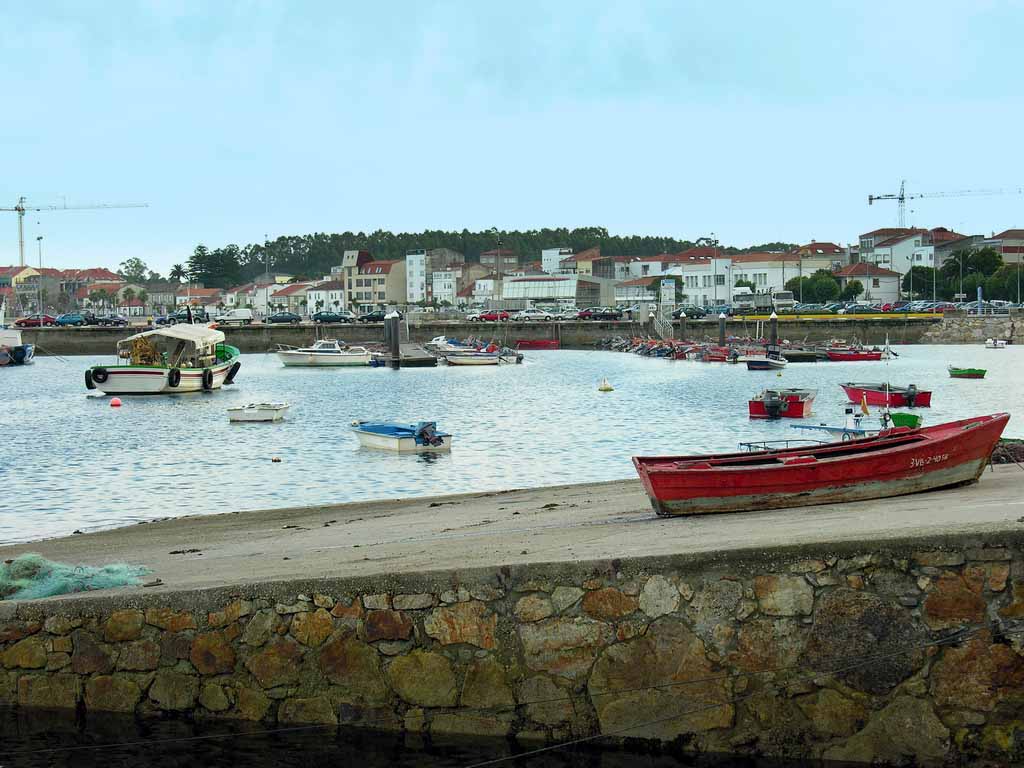
The town was born from the union of two historic centres — A Pobra do Deán and O Caramiñal — and lived through centuries of maritime trade, salting and canning. Its harbour is still a working port, with a fishing and shellfishing fleet, a fish market and a pleasant seafront promenade linking the quay with the beaches to the south. The marina pontoons share the water with purse seiners: that mix is the hallmark of the whole northern shore.
Valle-Inclán and the literary Barbanza
Few Galician towns have such a strong literary bond: Ramón María del Valle-Inclán spent long spells in A Pobra, and the town is proud of it, with his museum in the Torre Bermúdez — a beautiful Renaissance manor — and a viewpoint bearing his name high in the sierra. The landscapes of the Barbanza and this ría seep into his work. If you love literature, going ashore here has an extra draw you won't find in other ports of the ría.
The beaches: Cabío and A Barca
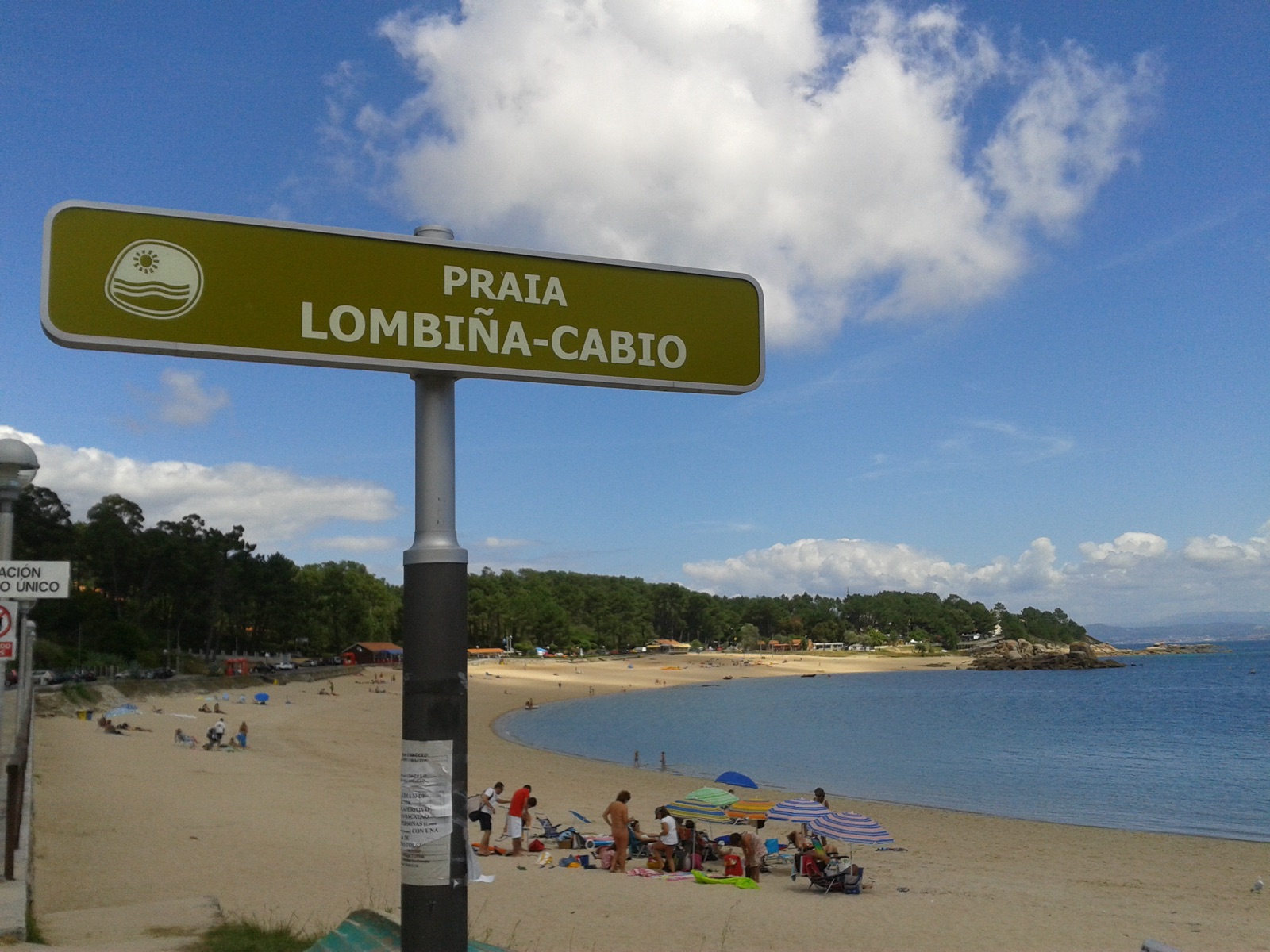
South of the harbour opens the Cabío area, with a broad sandy beach, pine woods behind and calm waters facing the inner ría. Next to the town centre, Praia da Barca is the lifelong urban beach. Seen from the boat, with the Barbanza behind, they make a postcard that surprises anyone who only knows the southern shore.
The Nazareno: September is its month
If you sail with us at this time of year, a local note: on the third Sunday of September A Pobra celebrates the Nazareno pilgrimage, one of the most famous and singular in Galicia — the one with the well-known procession of the shrouds, where devotees parade in coffins in gratitude for surviving a serious illness. Thousands of people fill the town that weekend. Arriving by sea on those days has a special atmosphere, though it's wise to book well in advance.
How we organise this route
To be honest: A Pobra is a full-day route. It's some 17-18 nautical miles round trip, and it deserves to be done unhurried:
- Morning departure from the port of Vilanova de Arousa.
- Leisurely crossing with photo stops: bateas, the Rúa lighthouse, whatever the day offers.
- Arrival at A Pobra mid-morning: a stroll around the harbour and old town, a vermouth or a seafood feast in a local tavern (the octopus and sardines of this shore have a well-earned reputation).
- On the way back, depending on tide and mood: a swim at Areoso or a cove on the Illa de Arousa, or a pass by the Punta Cabalo lighthouse.
- Return to Vilanova by mid-afternoon.
In a half day (4 hours) the crossing is possible, but you'd be racing the clock, and this route isn't meant to be rushed. For a half day we'd rather recommend Rianxo, Cambados or a lap of the Illa de Arousa.
Rates
- Full day: €500 — the option we recommend for A Pobra.
- Half day (4 hours): €300 — better for shorter routes.
- Fuel is charged separately, based on the route's actual consumption.
- Up to 6 guests plus the skipper. The price is per boat, not per person: split between 6, the full day works out at about €83 a head.
You don't need a licence or any experience: we are the skipper. You choose the plan; we provide the boat, the route and local knowledge of the ría.
Why crossing to the northern shore is worth it
Because it's the part of the ría almost nobody sees. The tourist flow of the Rías Baixas concentrates on Sanxenxo, O Grove and the southern shore; the Barbanza remains the Galicians' own territory, of working ports and towns alive all year round. Crossing the ría to A Pobra means seeing the whole of Arousa — bateas, lighthouses, islands and both shores — in a single day, and arriving at a town where the visitor is still a guest, not scenery.
Book your crossing to A Pobra do Caramiñal
If you'd like to do this route — or combine it your own way with Areoso, Rúa or the Illa de Arousa — write to us and we'll organise it around the day's weather and tide. We depart from the port of Vilanova de Arousa, skipper included.
WhatsApp: +34 685 74 24 20 — tell us which day you'd like to go out and how many you are, and we'll confirm availability right away.
Photos: Noel Feans — CC BY 2.0; Luis Miguel Bugallo Sánchez (Lmbuga) — CC BY-SA 3.0; Fernando Losada Rodríguez — CC BY-SA 4.0, via Wikimedia Commons.
Ready to experience the Arousa estuary onboard?
Full day €500 · half day €300 · fuel extra. Book on WhatsApp and we confirm in under 4 hours.
Book by WhatsApp

