
Birdwatching by boat on the Ría de Arousa: herons, cormorants and the autumn migration
The Ría de Arousa is one of Galicia's best spots for seabirds: grey herons, little egrets, cormorants, terns and passing ospreys. Here's where to see them from a skippered boat out of Vilanova de Arousa — and why September and October are the star months.
There is a Ría de Arousa that hardly anyone looks at. Not the one with the beaches or the seafood: the one that flies. Grey herons standing motionless on the low-tide rocks, cormorants drying their outstretched wings on the mussel rafts like little black totems, flocks of terns plunging wherever the water boils with baitfish. We rent out our skippered boat from the port of Vilanova de Arousa, and after years on the water we see them every single day without looking. But when someone comes aboard with binoculars, the whole trip changes: the boat slows down, conversation fades, and the ría becomes something else.
In this article we'll tell you which birds you can see from the boat on the Ría de Arousa, where the best corners are — Carreirón, the waters around Areoso, the mussel rafts, Punta Cabalo — why late summer and autumn are the best season, and how we run a trip designed for watching birds without disturbing them.
Why the Ría de Arousa is a paradise for birds
The short answer: food and shelter. The Ría de Arousa is the largest of the Rías Baixas and one of the most productive stretches of the European Atlantic. The upwelling of cold, nutrient-rich water that makes our shellfish famous also feeds everything that flies: where there are mussels, sardines and sand eels, there are seabirds.
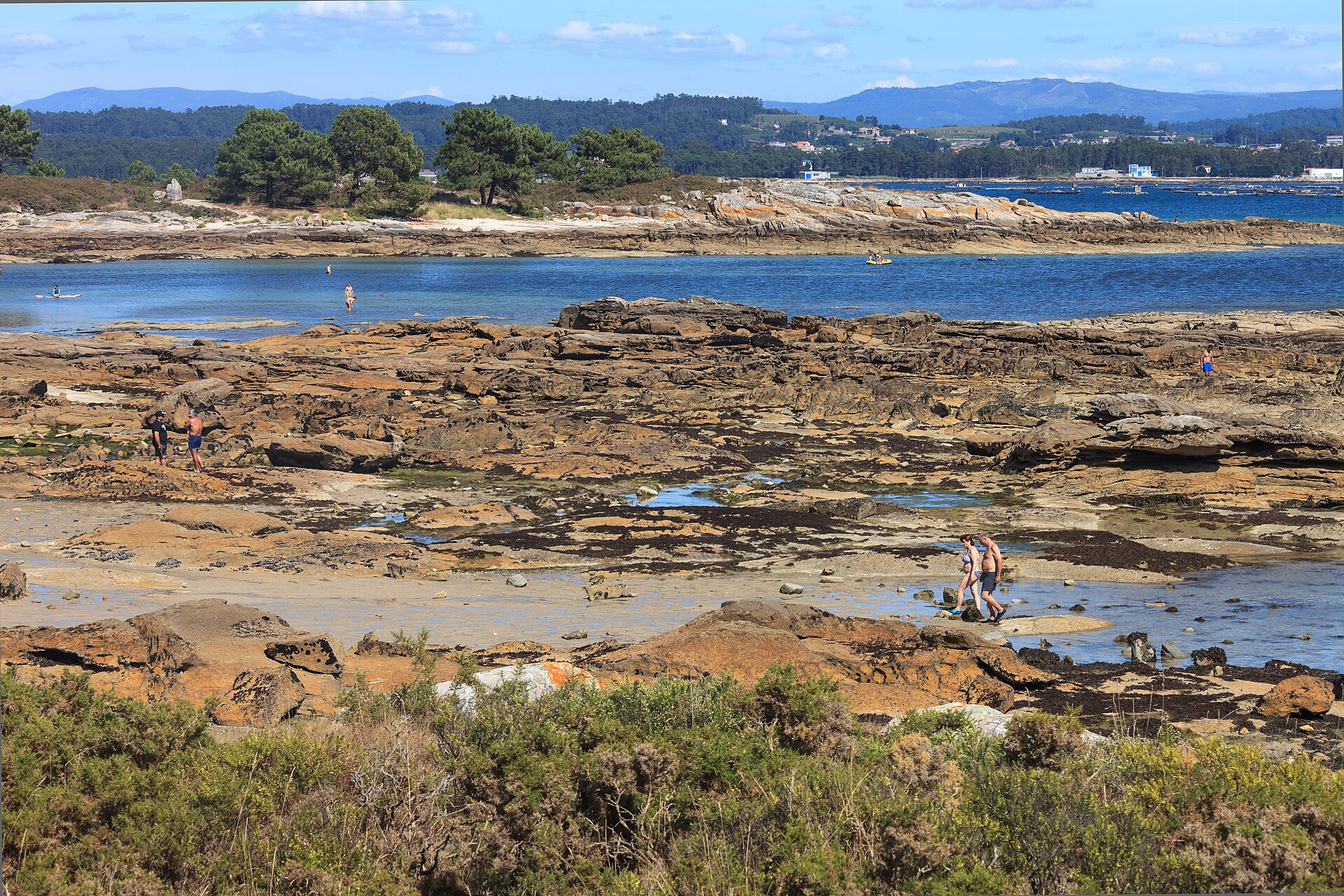
Then there's the geography. The ría is full of islands, islets, sheltered inlets and tidal flats that emerge at low tide. Every falling tide serves up a banquet of shellfish, crabs and worms for wading birds, and every uninhabited island is a safe roost. The southern tip of Illa de Arousa — the Carreirón nature area — and the islet of Areoso are two of those refuges, and both are best reached by sea.
It's no coincidence that much of the ría is protected: Carreirón is a Special Protection Area for birds within the Ons-O Grove complex, the islet of Areoso has its own protection, and neighbouring Illa de Cortegada belongs to the Atlantic Islands National Park. The paperwork doesn't lie: there are birds here because there's a living to be made.
Which birds you'll see from the boat
We're no ornithologists, but after so many hours afloat we know the roll call by heart. These are the near-guaranteed regulars and the gems that show up now and then:
The ría's regulars
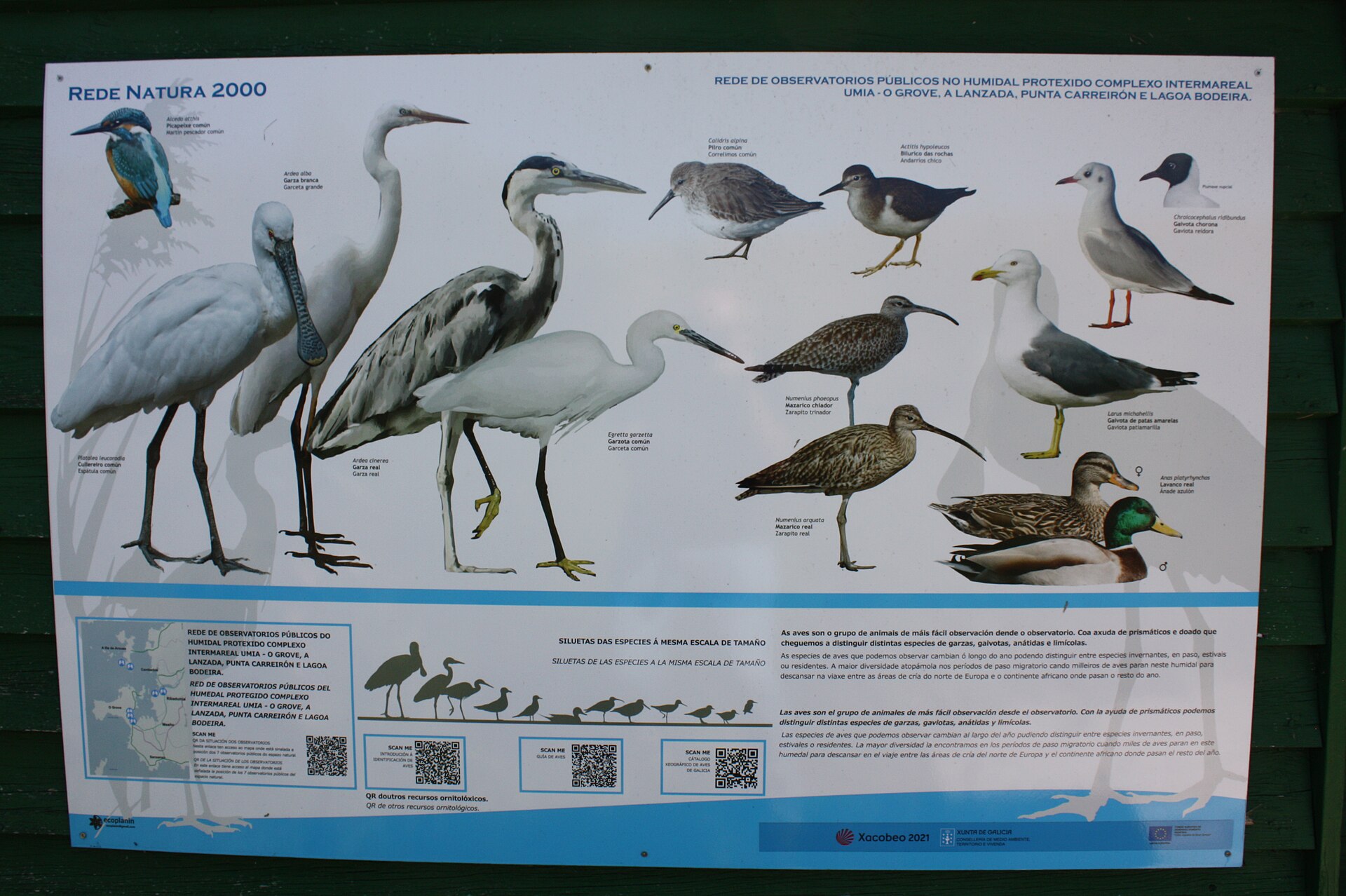
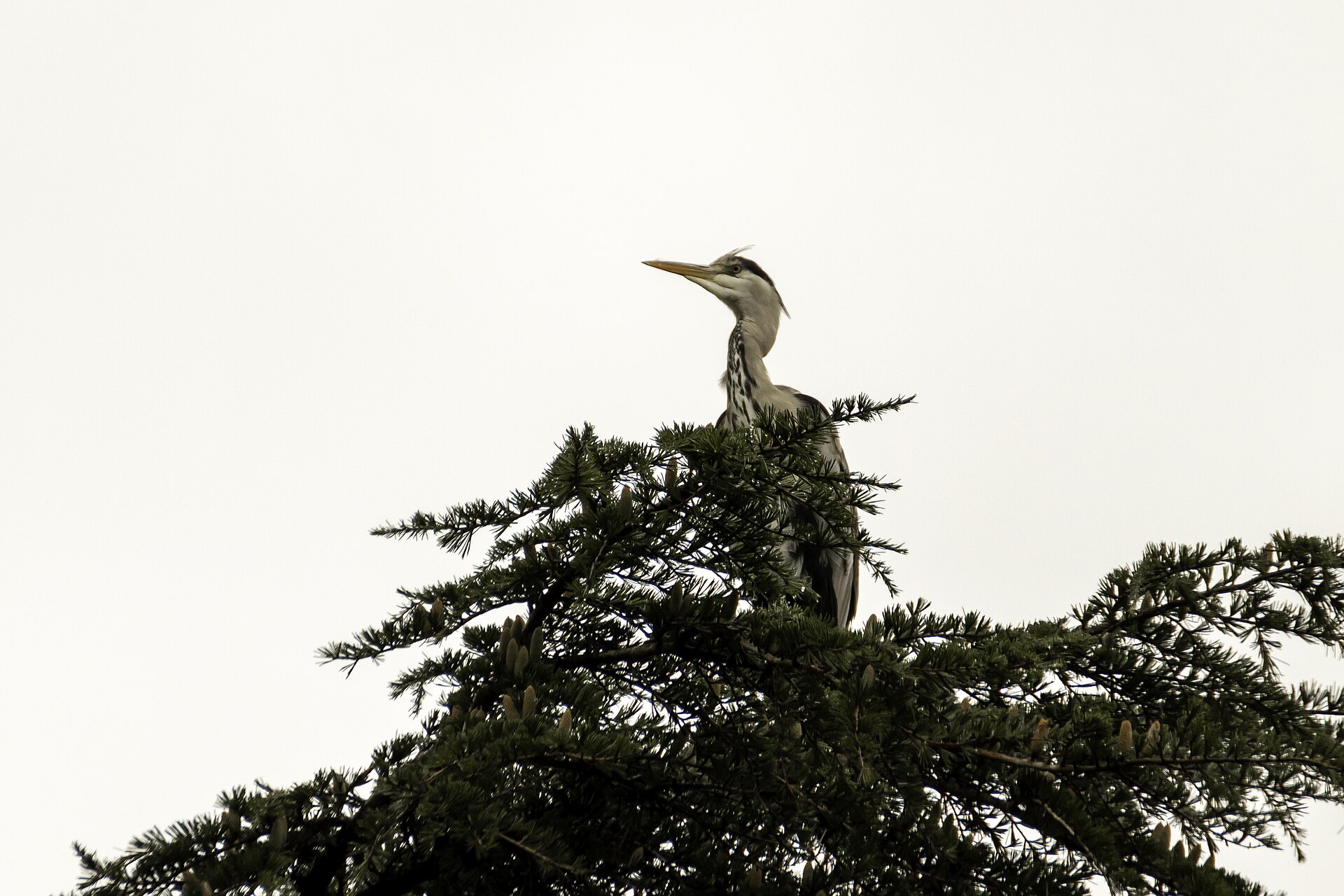
- Grey heron (Ardea cinerea): the grey lady of the low tide. She fishes motionless along the Carreirón shore and on the rocks of Punta Cabalo. Watching one take off ten metres from the boat, with that slow, elegant-pterodactyl wingbeat, is not something you forget.
- Little egret (Egretta garzetta): the white, restless version of the heron, scampering across the wet sand of the inlets chasing tiny fish.
- Great cormorant and European shag: you'll spot them on the mussel rafts with wings spread wide in a cross, drying off in the sun. The shag, more strictly marine, breeds on the ría's islets and is one of the area's most valuable species.
- Yellow-legged and lesser black-backed gulls: everywhere. They follow the mussel boats when the rafts are being worked — dozens of screaming gulls over a raft mid-harvest is the ría at its purest.
- Sandwich tern: the white torpedo. When small fish school near the surface it dives from ten metres up. If you see terns plunging, there's life below — fishermen have known it forever.
The ones that make a trip special
- Osprey: during the September–October and March–April migrations, the odd individual turns up to fish the ría. Watching one hover and drop talons-first is the jackpot of Arousa birdwatching.
- Eurasian oystercatcher: black, with a carrot-orange bill, patrolling the stony shores of Areoso and Carreirón.
- Curlews, sandpipers, plovers and godwits: the wader brigade, arriving each autumn from northern Europe to winter on the ría's tidal flats.
- Gannets and shearwaters: towards the mouth of the ría, on calm days, you'll see gannets dropping like white arrows. They come in from the open Atlantic following the fish shoals.
The best birdwatching spots… if you come by boat
Here's the beauty of it: the finest birding spots on the Ría de Arousa are precisely the ones you can barely see from land.
Carreirón and the O Bao inlet
The southern tip of Illa de Arousa is the sanctuary. You can walk it on land — there are even wooden hides so as not to disturb the birds — but from the sea the perspective is different: we cruise slowly along the shore at a respectful distance, and the herons, egrets and waders carry on regardless, because a quiet boat bothers them far less than a walker with a dog.
The islet of Areoso
Our private little Caribbean is also a protected islet where seabirds breed and rest. In high season anchoring is regulated for exactly that reason. From the boat, circling slowly, you'll see oystercatchers, cormorants, gulls and — with luck — terns fishing over the sandbanks that surround it.
The mussel rafts
The ría's more than 2,000 mussel-farming platforms are, without meaning to be, the biggest artificial feeding station and perch in Galicia. Every raft is a roost for cormorants and herons, and small fish gather beneath them. A slow cruise among the rafts at dawn is about the most productive thing you can do with a pair of binoculars.
Punta Cabalo and the island's north shore
The rocks around the Punta Cabalo lighthouse are a fixed stop for herons, cormorants and oystercatchers, with the lighthouse as a backdrop for photos. On the way, the channel between the island and Cortegada usually delivers waders at low tide.
September and October: the best time of year
If you ask us when to come birdwatching, we don't hesitate: now. Late summer and early autumn combine the best of both worlds:
- Post-breeding migration in full swing: thousands of birds that nested in northern Europe head south to Africa, and many stop to refuel in the Galician rías. This is when the surprises appear: ospreys, passage terns, waders by the flock.
- The winterers arrive: curlews, sandpipers and plovers that will spend the winter here start settling on the Carreirón flats.
- The ría stays gentle: September in Arousa tends to bring calm days, golden light and mild temperatures. Sailing is a joy, without the August crowds.
- Less boat traffic: with fewer boats on the water, the birds are more confident and let you get closer.
What a birdwatching trip with us looks like
You don't need to be an expert or bring a thousand-euro scope. A birding trip with us works like this:
- Slow pace, soft throttle: the watching sets the rhythm. We cruise slowly, cut the engine when the moment calls for it, and let the skipper — who knows every perch in the ría — position the boat without intruding.
- Respectful distance, always: we don't approach breeding islets or flush flocks on purpose. The rule is simple: if a bird changes its behaviour because of us, we're too close.
- Timed to the tide: we plan the trip around low water, when waders and herons work the shorelines. An early start helps: the first hour of the morning is magic.
- Bring binoculars if you have them (8x42 is perfect), a camera with zoom, a light jacket and patience. We take care of the rest.
- Small groups: a maximum of 6 people on board, which for birdwatching is a blessing — silence, room for everyone and no rush.
A half day (4 hours, €300) is plenty to cover the rafts, Carreirón, Areoso and Punta Cabalo at a relaxed pace. With a full day (€500) we add the Cortegada area, the mouth of the ría, or simply double the waiting time at the best spots — in birdwatching, waiting is half the craft. In both cases fuel is charged separately, based on distance covered.
Honest advice before you book
- Birds don't clock in. Herons, cormorants and gulls are near-certain; ospreys and gannets are a lottery. That uncertainty is exactly what makes it addictive.
- Weather rules. If the day brings hard wind or rough seas, we reschedule without drama. In bad seas neither the birds nor you will enjoy it.
- Mix and match. Most of our guests combine: a good hour of birding first on the right tide, then a swim at Areoso and a vermouth on board. The ría has room for all of it in one day.
- Kids welcome. Few activities hook a child faster than hunting for cormorants with binoculars from a boat. It's a perfect family plan.
Book your birdwatching trip on the Ría de Arousa
If you want to see the ría that flies — herons at Carreirón, cormorants on the rafts, terns fishing over Areoso — write to us and we'll build the trip around the tide and the season. We depart from the port of Vilanova de Arousa, with a local skipper, maximum 6 people: half day €300, full day €500, fuel not included.
Message us on WhatsApp at +34 685 74 24 20 and we'll tell you which days look best for tide and weather. The ría has been filling with wings all autumn: all that's missing is you on board.
Photos: Luis Miguel Bugallo Sánchez (Lmbuga), Lameiro and Bene Riobó — CC BY-SA 4.0, via Wikimedia Commons.
Ready to experience the Arousa estuary onboard?
Full day €500 · half day €300 · fuel extra. Book on WhatsApp and we confirm in under 4 hours.
Book by WhatsApp

