
Prone to seasickness? Why the Ría de Arousa is the best place to get over it
How to avoid getting seasick on a boat trip is the question we get asked most before booking. Here's why the sheltered waters of the Ría de Arousa are perfect for first-timers, and the tricks we use on board so nobody feels ill.
If there is one question we get on WhatsApp before almost every booking, it's this one: "What if I get seasick?" And we completely understand. Plenty of people have had a rough time on a ferry, an open-sea crossing or that holiday catamaran punching into the swell, and they carry the idea that stepping on a boat means feeling awful. We rent out our skippered boat from the port of Vilanova de Arousa, and we've taken aboard hundreds of self-declared landlubbers — and we can tell you, hand on heart, that seasickness on the ría is the exception, not the rule.
In this article we explain why motion sickness happens (and why it happens so rarely on the Ría de Arousa), what we do as skippers to prevent it, and what you can do before and during the trip so that your first day on a boat is the first of many.
Why we get seasick on a boat
Seasickness — motion sickness, to be technical — is not a weakness or a quirk: it's an information conflict in your brain. Your inner ear senses that you're moving, but your eyes, fixed on the deck or on a screen, insist that everything is still. Faced with that contradiction, the brain reacts with cold sweat, nausea and a strong desire for the boat to disappear.
Two practical conclusions follow straight from that definition:
- The less motion, the less conflict. A flat sea gives your brain very little to get sick about. This is where the ría has a huge head start, as we'll see now.
- The more you look at the horizon, the more your eyes and inner ear agree. That's why the worst spot on a boat is a closed cabin staring at your phone, and the best is the deck with your eyes on solid land.
The Ría de Arousa's advantage: sheltered waters
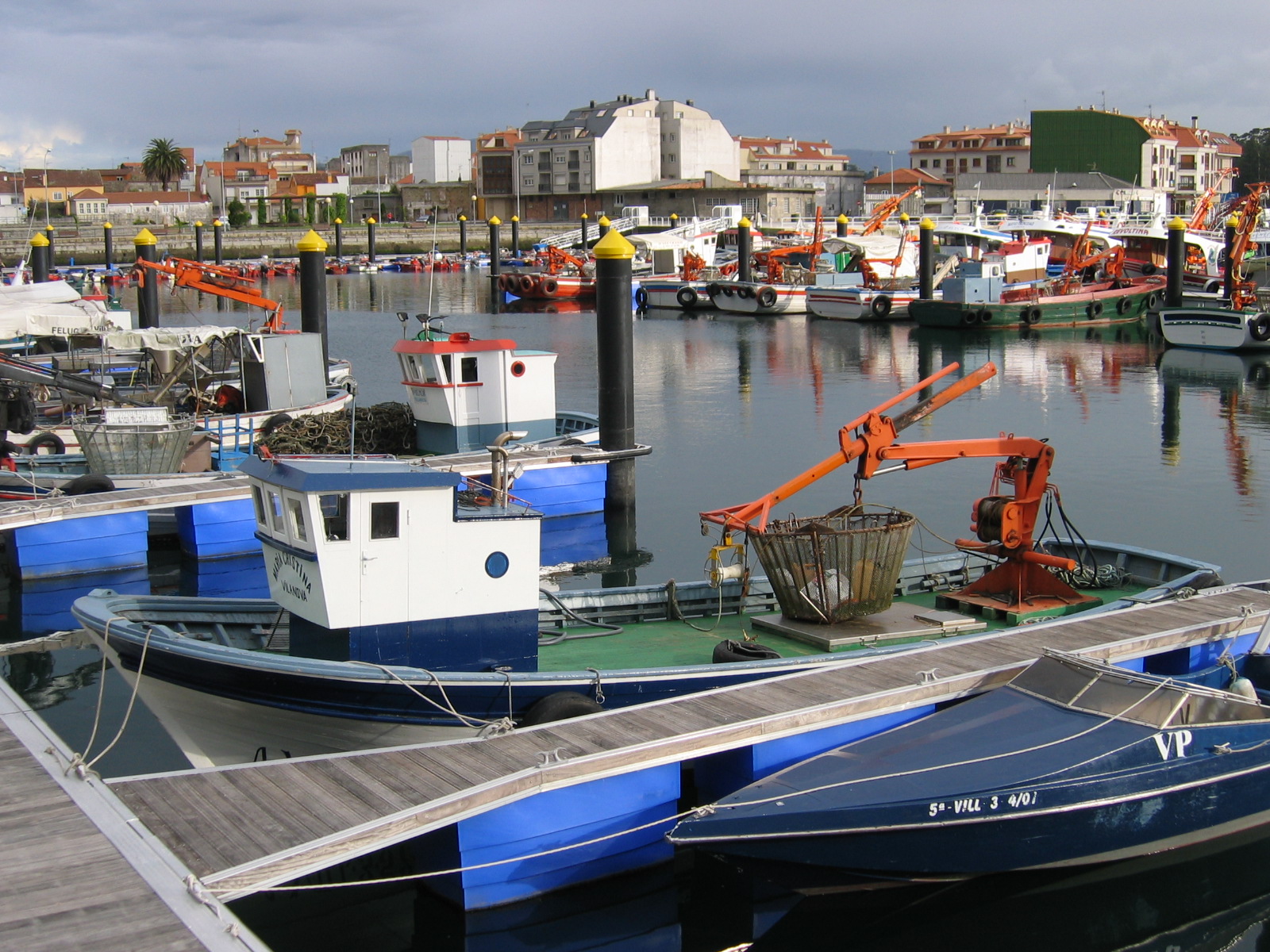
Here's something many visitors from outside Galicia don't know: a ría is not the open sea. The Ría de Arousa is a protected arm of the sea, the largest of the Rías Baixas, with the Illa de Arousa and the Illa de Sálvora acting as a natural shield against the Atlantic swell. The groundswell that makes a passage along the outer coast uncomfortable arrives here softened — or simply doesn't arrive at all.
Add to that an unexpected ally: the bateas. The thousands of mussel-farming platforms you see moored all over the ría don't just feed half of Galicia — they also work as breakwaters, further calming the surface in the areas we usually sail, like the channel between Vilanova and the Illa de Arousa or the route to the islet of Areoso.
The result is that, on a normal summer or September day, cruising the inner ría feels more like gliding across a big lake than "going to sea on a boat". Many guests say exactly that, slightly amazed, ten minutes in: "but this thing isn't even moving".
What we do as skippers so you don't get seasick
Having a skipper on board isn't just a legal convenience (you don't need a licence): it's also your best insurance against seasickness, because the person at the helm knows the ría by heart. These are the decisions we make on every trip, often without you even noticing:
- We choose the route based on the day's wind. If the nordés blows, we seek the shelter of the Illa de Arousa coastline; if the wind comes from the south, we change the plan. The ría always has a calm corner — you just need to know which one.
- We check the tides. With a full tide and little wind, you won't even notice you're under way. We time swimming stops and anchorages around the state of the sea.
- We adapt our speed. A gentle plane is more stable and more pleasant than bouncing along. We're in no hurry: the trip is yours.
- We anchor often. Our routes alternate cruising with swim stops in coves at Carreirón, Areoso or off the Punta Cabalo lighthouse. A boat anchored in a sheltered inlet barely moves, and your body appreciates the breaks.
- If someone starts feeling off, we act immediately. We sit them at the stern looking at the horizon, slow down, find shelter. It usually passes within five minutes.
Tricks you can use yourself (before and during the trip)
From our experience on board, this is what genuinely works:
Before boarding
- Sleep well the night before. Tiredness and hangovers are seasickness's best friends.
- Eat something light. Neither on an empty stomach nor after a feast. Toast, fruit, something salty.
- If you know you're very prone, take a motion-sickness tablet in advance (the "less drowsy" kind, half an hour before boarding). Ask your pharmacist; children are usually given specific formats.
- Acupressure wristbands don't have solid scientific evidence behind them, but some people swear by them and they do no harm. If they give you confidence, bring them.
Once on board
- Look at the horizon or the coastline, not at your phone or a book. The Ría de Arousa makes it easy: there's always land in sight — bateas, the Barbanza hills, the outline of Cambados.
- Sit at the stern, in the centre of the boat, where the motion is felt least. On our boat, 8.5 metres in length, the aft cockpit is the most stable spot.
- Fresh air, always. The ría's breeze works wonders.
- Sip water and skip the alcohol until we're anchored (afterwards, with a vermouth or an Albariño in a cove, it's a different story).
- Tell the skipper at the first symptom. No embarrassment: we've seen it all and we know what to do. The sooner you say it, the sooner it stops.
What about kids? Pregnant women? Grandparents?
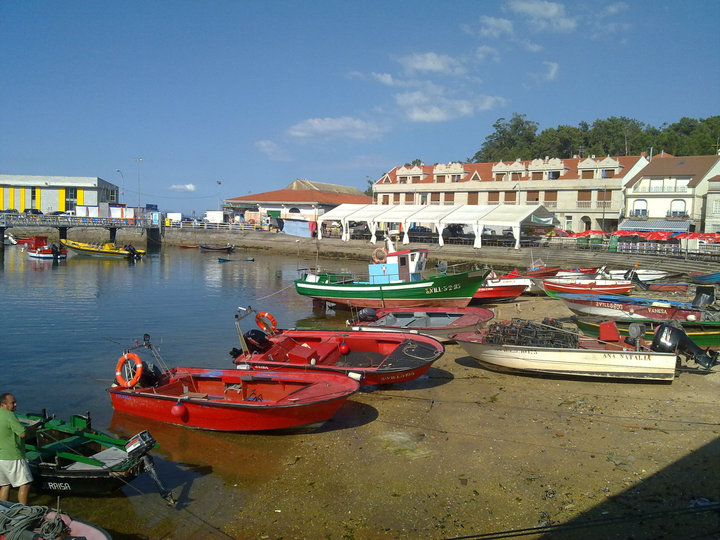
Our standard cruise around the ría is suitable for practically everyone, precisely because the waters are calm and the routes flexible. We've had everyone on board from babies in their life jackets to ninety-year-old grandmothers who came "just to watch" and ended up asking to sail past their home village. With children we usually do short legs of cruising and long swim stops, which is what they truly enjoy. If someone in your group has a particular situation — pregnancy, reduced mobility, diagnosed severe motion sickness — tell us when booking and we'll adapt the plan, no problem.
The best antidote: a plan that doesn't rely on "toughing it out"
In the end, our philosophy is simple: seasickness is beaten with a good passage plan, not with willpower. A well-designed outing on the Ría de Arousa — short legs, sheltered areas, anchorages in turquoise coves, shellfish and Albariño on the horizon — leaves no room for feeling ill. In fact, the most repeated comment from guests who board "feeling nervous" is that they completely forgot they were on a boat.
If you want to see for yourself, this is what the full skippered experience from Vilanova de Arousa costs: half day (4 hours) for €300 or full day for €500, fuel not included, for groups of up to 6 people. The skipper — us — is included, with every anti-seasickness trick in this guide put into practice.
Message us on WhatsApp at +34 685 74 24 20, tell us who's coming aboard and we'll prepare the calmest (or the most complete) route for the day. See you at the port of Vilanova.
Photos: Luis Miguel Bugallo Sánchez (Lmbuga) — CC BY-SA 4.0; Bopeixe — CC BY-SA 4.0; As Sinas beach, public domain — via Wikimedia Commons.
Ready to experience the Arousa estuary onboard?
Full day €500 · half day €300 · fuel extra. Book on WhatsApp and we confirm in under 4 hours.
Book by WhatsApp

