
Illa de Cortegada by boat: the secret national park of the Ría de Arousa
Illa de Cortegada is the hidden gem of the Atlantic Islands National Park: a laurel forest unique in Europe, just half an hour by boat from Vilanova de Arousa. Here's how to visit it, what you can and can't do, and why it deserves a spot on your route.
Whenever someone asks us for "a different kind of route", we almost always end up talking about the same island. Not Areoso with its Caribbean-white sand, nor Illa de Arousa with its beaches. It's a low, green, densely wooded island that almost nobody has on their radar: Illa de Cortegada, at the far end of the Ría de Arousa, right in front of O Carril. From our base in the port of Vilanova de Arousa, where we rent out our skippered boat, it's half an hour of easy cruising away — and every time we take someone there, the reaction is the same: "How does nobody know about this place?"
This article is the guide we wish we'd read before our first visit: what exactly Cortegada is, why it's a national park, what you can and cannot do there (and in a national park, that matters a lot), and how it fits into a boat day from Vilanova.
What is Illa de Cortegada?
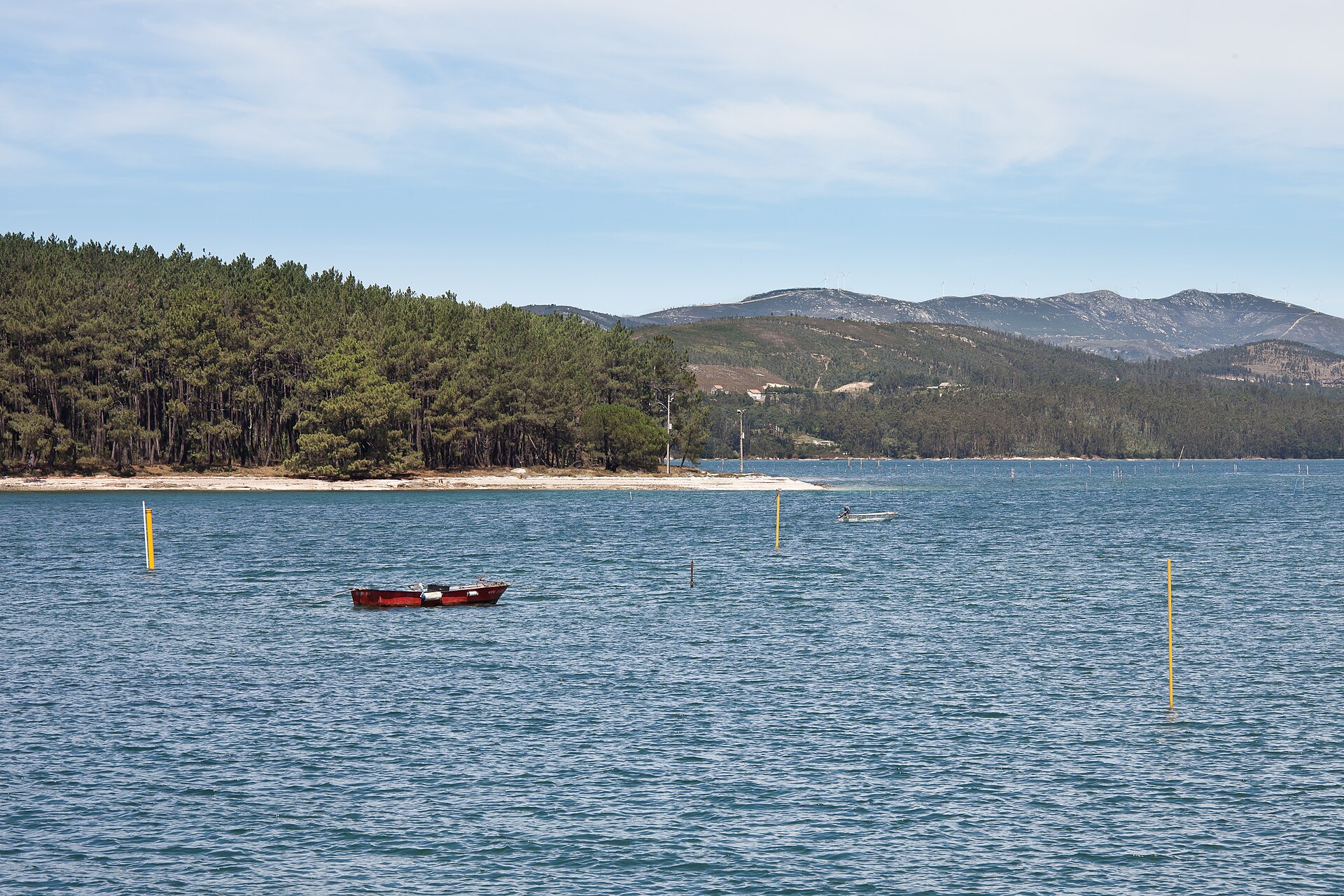
Cortegada is the least-known of the four islands that make up the Atlantic Islands of Galicia Maritime-Terrestrial National Park, alongside Cíes, Ons and Sálvora. While its sisters face the open ocean, Cortegada hides deep inside the ría, at the mouth of the River Ulla, barely two hundred metres off the coast of O Carril (Vilagarcía de Arousa).
Its numbers are deceiving: just over 40 hectares, no cliffs, no spectacular beaches. Its treasure is on the inside: the largest and best-preserved laurel forest in southern Europe, with trees over twelve metres tall. Walking beneath that green canopy, in filtered light that smells of laurel and sea salt at once, is unlike anything else in the Rías Baixas.
A curious history: the island that was given to a king
Cortegada has one of Galicia's strangest backstories. In 1907, the people of Carril gave the island to King Alfonso XIII so he could build his summer palace there, hoping the royal court would bring prosperity to the area. The families living on the island were evicted... and the palace was never built: the king ultimately chose La Magdalena, in Santander.
The island then spent a century in private hands, closed off and abandoned — and paradoxically, that abandonment was its salvation: the laurel forest grew undisturbed over the old vegetable gardens and vineyards. In 2007, a hundred years after the gift, the Galician government bought it back and added it to the national park. Today the ruins of the old village, the chapel and the stations of the cross still stand, swallowed by laurel. Wandering among those moss-covered stones is part of the magic.
How to visit Cortegada (and what the park allows)
Here's the important part, because Cortegada is not a "drop anchor and jump in" kind of island. It is a national park, and that comes with rules:
- The interior of the island is explored on foot, along the marked trails. The park runs free guided visits in season, which we recommend booking in advance.
- Navigation and anchoring in park waters are regulated. Anchoring requires a permit from the national park (applied for online, free of charge); if you sail with us, we take care of that.
- No camping, no fires, and take nothing with you — not a shell, not a laurel cutting.
- At big spring low tides, the island connects to Carril via a causeway of sand and stone, the Camiño do Carro, once used by ox carts. Watching it appear and vanish with the tide is a show in itself.
Sounds like red tape? In practice it's simple — which is exactly why this plan works so well on a skippered boat. We handle the permit, pick the right tidal window — the inner ría runs shallow at low tide — and leave you the good part: the island.
The route from Vilanova: mussel rafts, Carril and the Traslatio sea
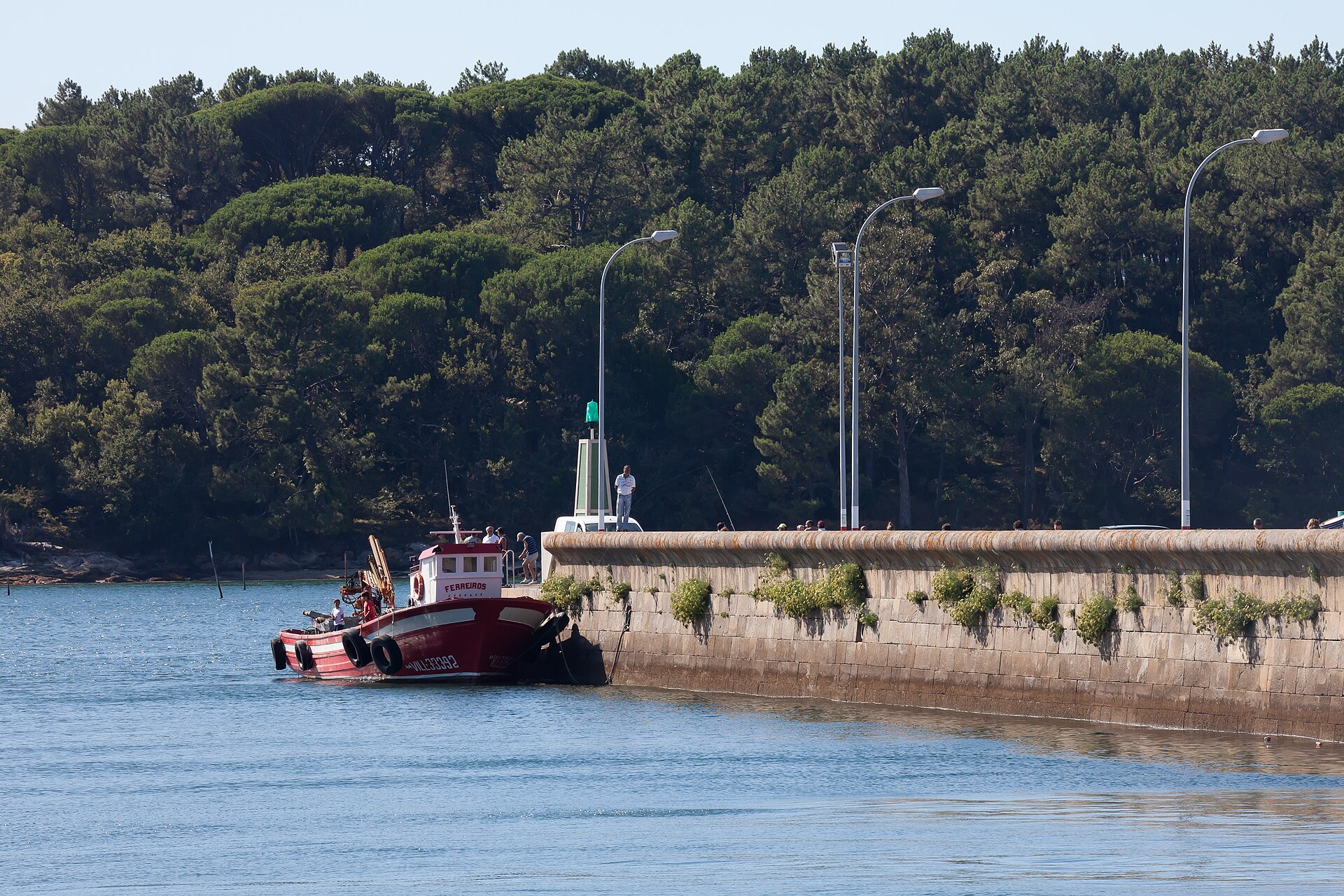
The beauty of going to Cortegada by boat isn't just the destination, it's the journey. From the port of Vilanova de Arousa you cruise north through the inner ría, and the trip is a highlights reel of what makes Arousa unique:
- The maze of bateas. We weave between the mussel-farming rafts, with gulls and cormorants working all around. If you've never seen a batea up close, here you'll see hundreds.
- Carril and its clam beds. The cove surrounding Cortegada is home to the Carril clam, probably the most famous in Spain. At low tide you can see the shellfish beds and the mariscadores working the sand the way it's been done for generations.
- The Traslatio route. These waters are the final stretch of the maritime route of the Way of St James: according to tradition, the boat carrying the Apostle's body sailed up the ría and the Ulla to Padrón, passing right through here. There's something quietly solemn about sailing it, pilgrim or not.
How it fits into your boat day
Our honest recommendation, after many outings:
- Half day (4 hours, €300): departure from Vilanova, a route through the bateas, an approach to Cortegada and a return along the Carril and Vilaxoán coast. Plenty of time to see it all from the water at an easy pace; actually landing on the island is tight — it depends on tides and the permit.
- Full day (€500): this is where Cortegada shines. A morning in the inner ría — bateas, Carril, the island and its forest — lunch on board or in a nearby port, and an afternoon of contrast: south to Areoso and its white sand, or to the coves of Illa de Arousa for a swim. Atlantic forest in the morning and the "Galician Caribbean" in the afternoon: few places in the world offer that double bill in a single day.
In both cases, fuel is charged separately, and the boat takes a maximum of 6 guests plus the skipper, so there's room and calm for everyone.
When to go
Cortegada is rewarding year-round, but September and October are an especially good moment: the ría is still mild, there's less boat traffic, the forest is at its lush green best, and it coincides with the Albariño grape harvest in the Salnés — finishing the day with a glass in Cambados rounds it off perfectly.
Quick questions
Can I go without a boating licence? Yes: our boat always sails with a professional skipper, so you don't need any qualification. You watch; we navigate and handle the park permits.
Is it a good plan with kids? A very good one. Short cruising in sheltered waters, an island with a story about kings and an "enchanted forest", and shellfish gathering in plain view. Few routes deliver so much for so little sailing.
Can it be combined with wildlife watching? Around Cortegada and the bateas you'll often see herons, cormorants and passing ospreys; dolphins are more common in the middle and outer ría, which we can include in a full-day plan.
Book your route to Cortegada
If you'd like to see the laurel-forest island — or build the full day with Areoso and a swim included — message us and we'll match it to the tides and the park permit. WhatsApp the skipper directly: +34 685 74 24 20. We reply fast, no obligation, and we'll tell you honestly which day and which tide suit you best.
Photos: Pavlemadrid and Luis Miguel Bugallo Sánchez (Lmbuga) — CC BY-SA 3.0, via Wikimedia Commons.
Ready to experience the Arousa estuary onboard?
Full day €500 · half day €300 · fuel extra. Book on WhatsApp and we confirm in under 4 hours.
Book by WhatsApp

