
Illa de Ons by boat from Vilanova de Arousa: the most Atlantic full-day trip
How to reach Illa de Ons on a private boat from Vilanova de Arousa: sailing times, National Park permits, the lighthouse, Buraco do Inferno, beaches, and when it's worth it (and when it isn't).
Some trips stay inside the ría. Others head out towards the Atlantic. Illa de Ons is one of the latter. It sits at the mouth of the Ría de Pontevedra, in open water, and from the deck of a boat you see it for what it is: an island of granite, cliffs and a lighthouse, part of the Atlantic Islands of Galicia National Park alongside Cíes, Sálvora and Cortegada.
We rent our skippered boat out of the port of Vilanova de Arousa, and we get asked this a lot: can you go to Ons from Vilanova? The short answer is yes. The long answer — with times, permits, what to see and when we'd advise against it — is this article.
Where Ons is, and why it isn't a half-day trip
Ons is a long, narrow island, about 5.5 km from north to south, with its little sister Onza tucked in at the southern tip. It closes off the Ría de Pontevedra opposite Sanxenxo and Bueu. From Vilanova de Arousa there's no shortcut: you head down the Ría de Arousa, pass Illa de Arousa and the Punta Cabalo lighthouse, leave the ría between Sálvora and San Vicente do Mar (O Grove), and turn south to Ons.
The honest numbers:
- Distance: roughly 18–20 nautical miles each way.
- Sailing time: about an hour and a quarter in good conditions, a bit more with a swell.
- Option: full day only (€500). On a 4-hour half day (€300) you'd spend almost all of it underway and barely any time at the island. For a half day, the inner ría — Areoso, the mussel rafts, Illa de Arousa — gives you far more.
- Fuel: charged separately, as on all our trips, and on this route it adds up because it's the longest one. We give you an estimate before you book, so there are no surprises.
The journey is half the plan
The beauty of going to Ons from Vilanova is that the crossing takes in half the Rías Baixas from the water. On the way out you weave between the mussel rafts (bateas), see Monte Lobeira on the skyline, skirt Illa de Arousa and, once out of the ría, the horizon suddenly opens up. To port lies the O Grove peninsula and, beyond it, the long beach of A Lanzada. Ahead, Ons and Onza stand out against the ocean.
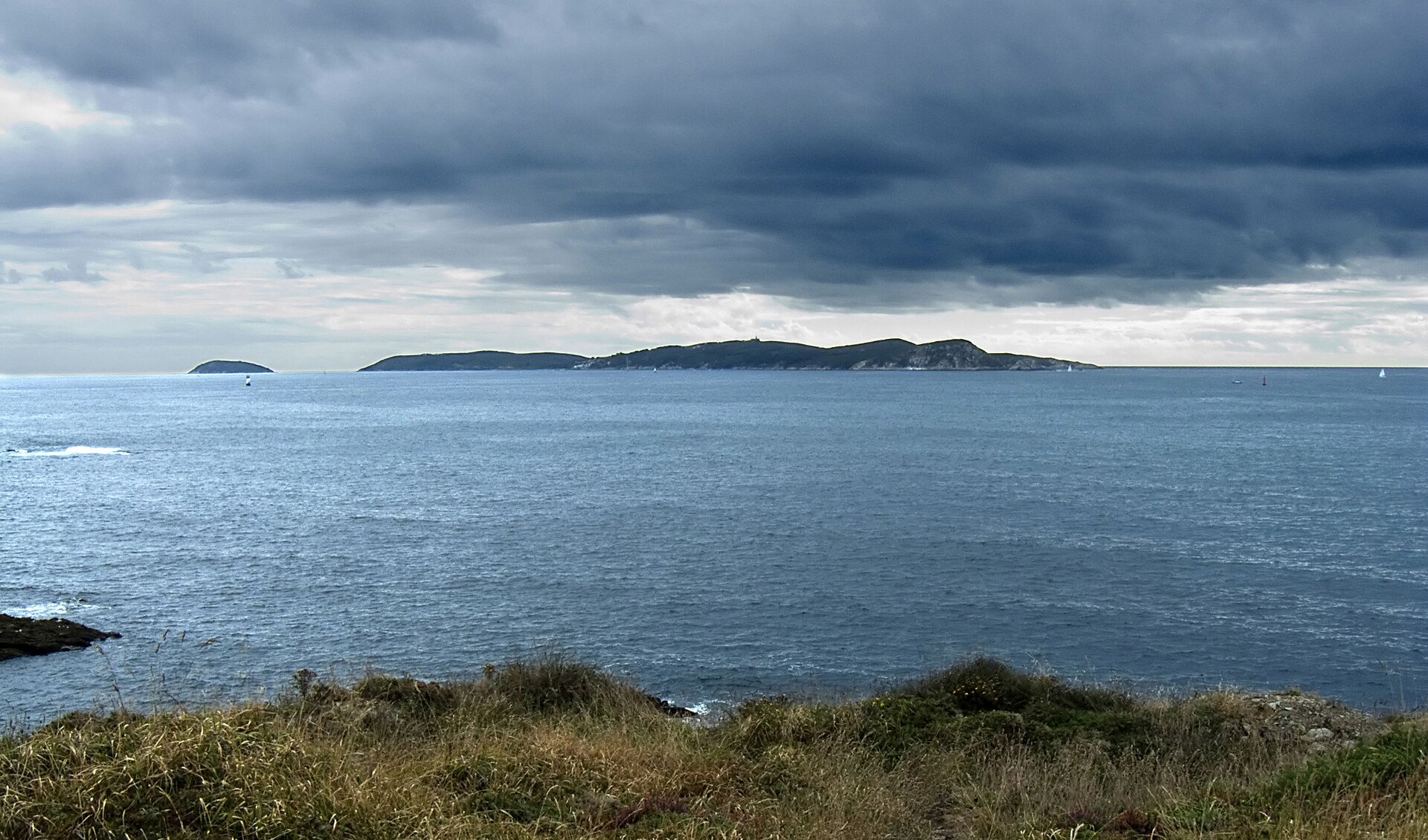
The mouth of the ría and the waters around Ons are also among the best places in Galicia to spot dolphins. We can't promise it — they're wild animals — but it's not unusual for a pod to come and ride the bow.
What to see on Illa de Ons from the boat
The west coast: cliffs and the Buraco do Inferno
The side facing the Atlantic is wild: cliffs, granite slabs and colonies of gulls and shags. This is where you'll find the famous Buraco do Inferno ("Hell's Hole"), a chasm in the rock where, on rough days, the sea rushes in with a roar. Local legend says that at night you can hear the cries of lost souls. In calm seas we can approach respectfully to see it from the water; with a swell, we leave it for another day.
Ons lighthouse
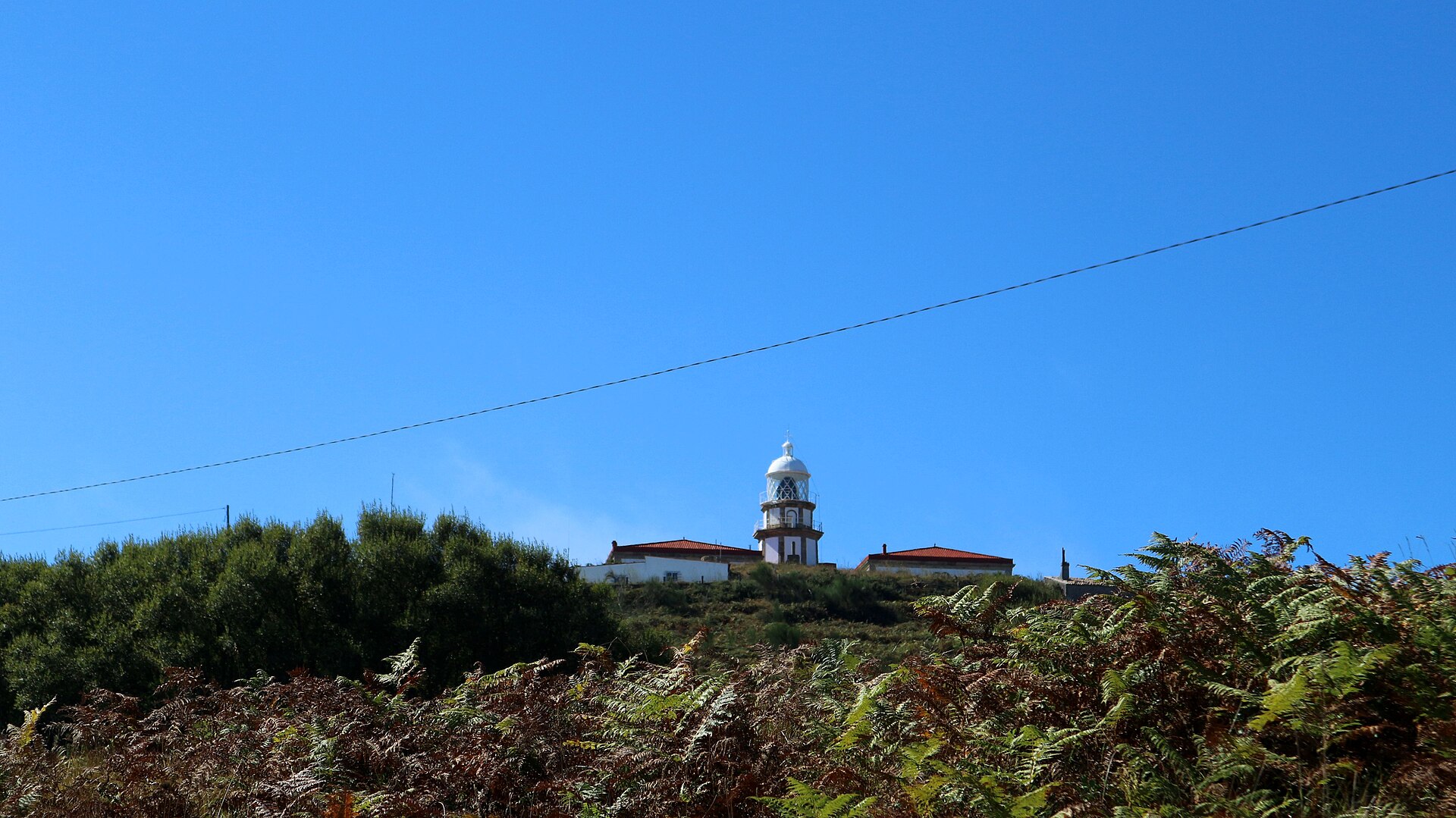
On the island's highest point stands the Ons lighthouse, built in 1926, an octagonal stone tower that is one of the most powerful lights on the Galician coast. It's visible from many miles out and is a classic landmark for sailors entering the Ría de Pontevedra.
The east coast: white sand and clear water
The side facing the ría is a different story: sheltered, with white sandy beaches and water of a blue that surprises first-time visitors to Galicia. Praia de Melide, in the north, is the best known; Area dos Cans and the Canexol area complete the picture. This is where, permit and conditions allowing, we drop anchor for a swim and lunch.
The village and the octopus
For centuries Ons was home to a small community of fishermen and farmers; today only a handful of residents remain, plus a few houses that open in season. In summer, restaurants near the pier are known for their pulpo á feira (Galician-style octopus). Out of season, don't count on them: the sensible thing is to bring lunch on board.
Permits: what you need to know about the National Park
Ons is a national park, and the rules reflect that. They exist to protect the island, and we're all for them:
- Navigation: recreational boats need a Park authorisation to sail in its waters. Our boat already has it.
- Anchoring: you may only anchor in designated areas and with prior authorisation, which has limited places in summer. We apply for it for the date of your trip.
- Going ashore: in high season, visiting the island requires a free authorisation with a daily quota. If you'd like to go for a walk, we'll explain how to request it and plan the day around it.
- Total respect: no collecting shells, plants or stones, and all rubbish comes back to port with us.
That's why this route is best booked a little in advance, especially in July and August.
When is Ons worth it?
- June to September: the longest days and the most settled sea. This is the real season.
- May and early October: fewer people, beautiful light and, with luck, days of gentle north-easterly and glassy sea. In late October you still get good days, but you have to pick them with the forecast in hand.
- Out of season the scheduled ferries stop running to Ons, so arriving by private boat becomes a very special way to see the island almost to yourself.
And we'll say it plainly: if there's a westerly swell or strong wind, we don't go. Leaving the ría means open sea, and there's no point in an uncomfortable day. In that case we'll suggest a different date or a full day in the Ría de Arousa (Illa de Arousa, Areoso, Cortegada, Cambados), which is just as beautiful and much more sheltered.
What a typical full day to Ons looks like
- 10:00 — Boarding at the port of Vilanova de Arousa. Safety briefing and forecast check.
- 10:15–11:30 — Down the ría among the mussel rafts and Illa de Arousa, then out through the mouth.
- 11:30–13:00 — Around the island's west side: cliffs, Buraco do Inferno, lighthouse.
- 13:00–16:00 — At anchor on the east coast: swimming, lunch on board, and snorkelling if the water allows.
- 16:00–17:30 — A relaxed return, passing by A Lanzada or Areoso if you fancy it.
A maximum of 6 guests plus the skipper, even though the boat (8.5 m long) is certified for 10: we prefer everyone to be comfortable, especially on a long crossing.
What to bring for the Ons crossing
- Warm layers, even in August: it gets chilly out at sea.
- Sunscreen, a cap and sunglasses.
- Food and drink (a chilled Albariño at anchor never fails).
- If you get seasick, take something before leaving: this is the route with the most open sea of all our trips.
- Swimsuit, towel and snorkel mask.
Book your trip to Illa de Ons
If you'd like to see Ons from the sea — the lighthouse, the cliffs, the white beaches and, with luck, the dolphins — send us your dates and we'll check the forecast together to pick the best day. Skippered boat rental from Vilanova de Arousa: full day €500, fuel extra.
📲 WhatsApp: +34 685 74 24 20 — tell us how many of you there are and which day suits you, and we'll confirm availability and permits.
Photos: Joseolgon — CC BY 4.0; Miguel Branco — CC BY-SA 4.0; Angel Torres — CC BY 2.0. Via Wikimedia Commons.
Ready to experience the Arousa estuary onboard?
Full day €500 · half day €300 · fuel extra. Book on WhatsApp and we confirm in under 4 hours.
Book by WhatsApp

