
The Traslatio Route: the maritime Camino de Santiago by boat from Vilanova
The Traslatio is the only maritime stage of the Camino de Santiago: the journey pilgrims took with the Apostle's body. It departs from Vilanova de Arousa. Here's how to do it.
The Traslatio Route is the only maritime stage of the Camino de Santiago — and it starts exactly from the port of Vilanova de Arousa. According to Jacobean tradition, this is the journey the disciples of the Apostle Santiago took when transporting his body from Jerusalem to Galicia, up the Arousa estuary and the Ulla river to Padrón. Today it forms part of the Spiritual Variant of the Portuguese Way, and thousands of pilgrims do it every year.
This is the guide: what the Traslatio is, how to do it, what you'll see and how it combines with the rest of the Camino.
The legend
Jacobean tradition tells that after the martyrdom of the Apostle Santiago in Jerusalem around year 44 AD, two of his disciples — Atanasio and Teodoro — recovered his body and transported it by sea to Galicia, sailing in a stone boat without oars or rudder. They entered through the Arousa estuary, sailed up the Ulla river, and disembarked at Iria Flavia (today's Padrón).
From there they moved the body to Libredón (today's Santiago de Compostela), where it was buried. Seven centuries later, in 813 AD, the hermit Pelayo discovered the tomb — and the Camino de Santiago was born.
The Traslatio symbolically recreates that first voyage. It is the origin of the Camino, not a modern variant.
The route: point by point
The modern Traslatio covers the Arousa estuary and the lower Ulla:
- Start: Vilanova de Arousa marina.
- Departure and skirting Illa de Arousa via its east side.
- Crossing to Pontecesures and entering the Ulla river.
- Arrival at Pontecesures / Padrón after approximately 1 hour 20 min of navigation.
The most unique feature: during the river run you see the maritime cruceiros — twelve stone crosses set on shores and mussel rafts marking the symbolic path the Apostle followed. A unique form of Jacobean devotion that doesn't exist anywhere else in the world.
When the Traslatio runs
The Traslatio operates April to October, with peak demand in July, August and September coinciding with the main Portuguese Way season. Book well in advance in August — slots can sell out weeks ahead.
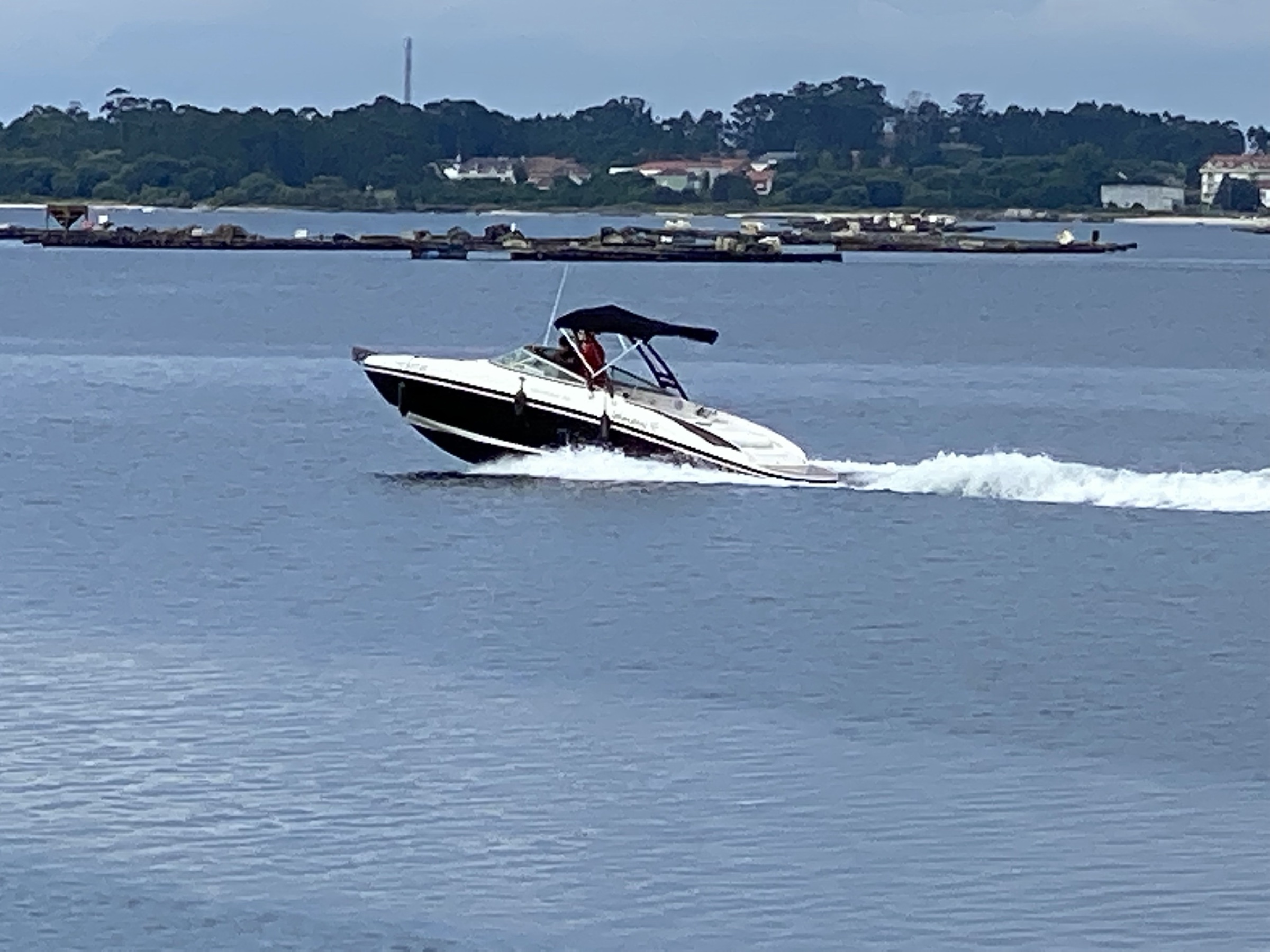
There are scheduled daily departures by specialised companies that move large groups. But you can also do it as a private charter with a boat for your group — more flexibility on timing and rhythm.
Compostela credential and sealing
The Traslatio counts as a valid Camino stage for pilgrims doing the Portuguese Way Spiritual Variant. To be recognised on the Compostela (official certificate in Santiago):
- Complete the rest of the Camino Portugués minimum stages (at least 100 km walked).
- Stamp the credential at Vilanova port before boarding and at Padrón when disembarking. Both locations provide stamps.
- Continue on foot Padrón → Santiago (about 25 km).
If you just want to do the crossing as an experience (not as a pilgrim) — that's also valid, called "Cultural Traslatio". No credential needed.
The private option: charter your own boat
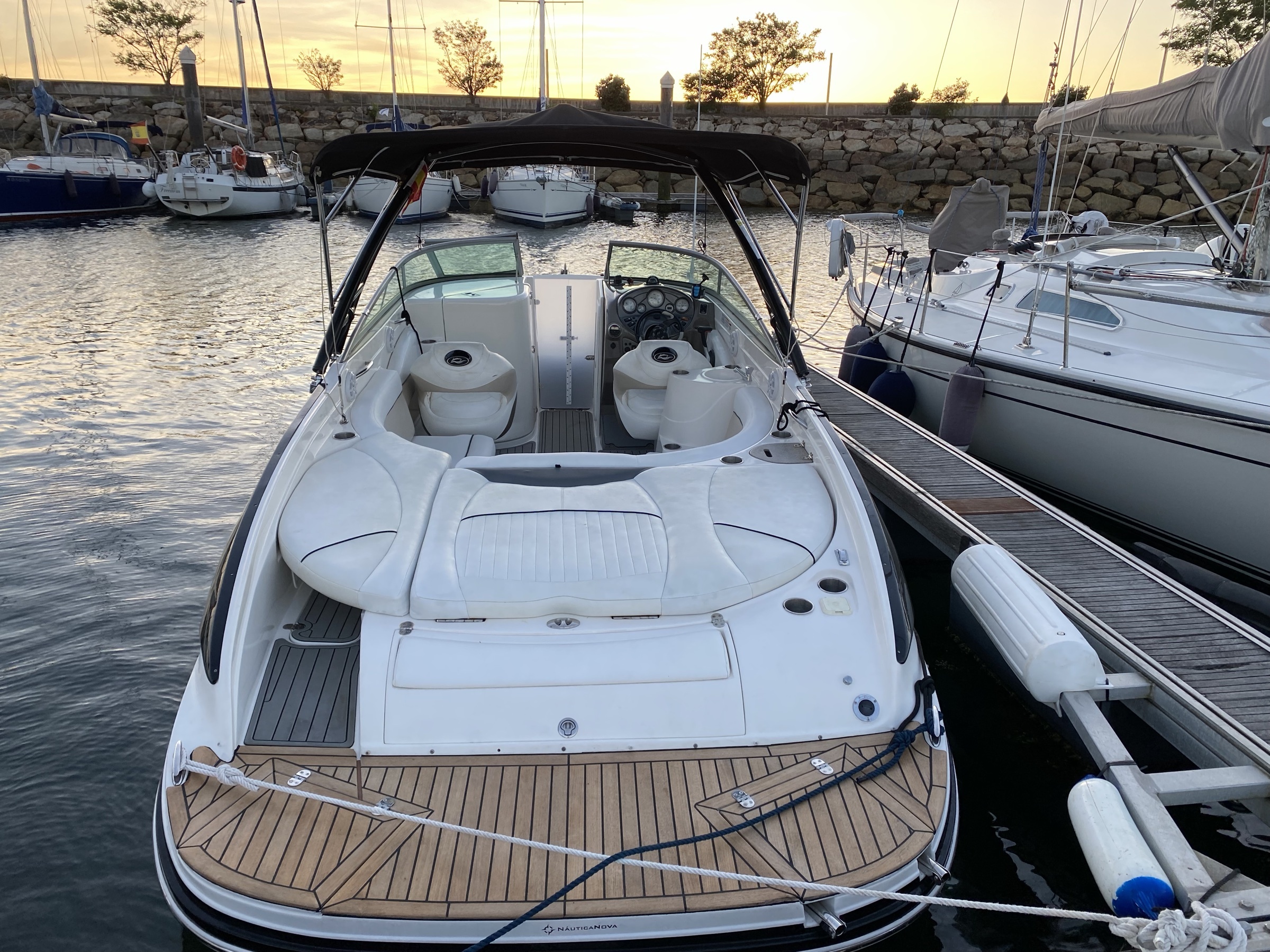
Scheduled departures move 20-50 people. If you're a pilgrim who prefers intimacy, or a small group wanting time on board, chartering a private boat makes sense:
- Departure at your time (not 9 a.m. with the rest of the bus).
- Technical stops during the crossing: Areoso, Punta Cabalo, mussel-raft viewpoint.
- Deck time without crowds — the crossing is landscape, not just transport.
- Lunch at a riverside restaurant on the Ulla if arranged in advance.
- Credential stamping the skipper helps with.
Standard rate for up to 6 pilgrims + skipper:
- €300 half day (Vilanova → Padrón → return): enough for the crossing and brief swim.
- €500 full day: more relaxed crossing, stops and lunch.
Fuel extra.
What you'll see during the crossing
The Traslatio isn't just a transfer — it's dense cultural and natural landscape:
- Leaving Vilanova: the port, the fishermen, the first mussel rafts left and right.
- East side of Illa de Arousa: pine forests, traditional Galician houses.
- Mussel-raft polygon in the middle of the estuary: hundreds of floating shellfish-cultivation platforms, a unique landscape worldwide.
- Entering the Ulla: estuary narrows, salinity drops, scenery turns riverine.
- Maritime cruceiros: the 12 stone crosses marking the symbolic path.
- Carril and Vilagarcía on the south shore: fishing towns with Jacobean tradition.
- Arrival at Pontecesures / Padrón: historic bridge, church and start of the walking Camino.
Combine with the walking Camino
Standard itinerary:
- Day 1-3: Portuguese Way from Pontevedra to Pontevedra-Combarro-Armenteira (Spiritual Variant on foot).
- Day 4: Vilanova → Padrón (Traslatio by boat).
- Day 5: Padrón → Santiago (on foot, ~25 km).
Shorter and longer variants exist. The full Spiritual Variant takes 4-5 days.
What to bring for the Traslatio
- Pilgrim credential (for stamping at Vilanova and Padrón).
- Small backpack with essentials — leave the rest at your Vilanova accommodation.
- Sea clothing: light windbreaker, cap, sunglasses, sunscreen.
- Footwear that can get wet (sandals or water shoes).
- Camera or journal for what you'll see during the crossing.
- Water bottle (we include water onboard).
Booking and contact
If you want to do the Traslatio with a private boat from Vilanova de Arousa, WhatsApp us at +34 685 74 24 20 with tentative date, number of pilgrims and whether you carry the credential or it's a cultural crossing. We coordinate tide, sealing and lunch in Padrón if needed.
The Traslatio is history, legend and geography condensed in 90 minutes of navigation. It's the symbolic start of the Camino de Santiago, the journey that originated Europe's most famous pilgrimage. And it happens right here, in the Arousa estuary, between Vilanova and Padrón.
Ready to experience the Arousa estuary onboard?
Full day €500 · half day €300 · fuel extra. Book on WhatsApp and we confirm in under 4 hours.
Book by WhatsApp

