
Carril clams: a boat trip from Vilanova to the village of Spain's finest clam
The Carril clam is the most celebrated in Spain, and its cultivation beds are best seen from the water. Join us by boat from Vilanova de Arousa to O Carril: what the clam beds are, why this clam is different and where to eat it fresh from the ría.
Ask at any fish market in Spain which clam is the best and the answer comes before you finish the question: the Carril clam. A small fishing village with barely two kilometres of shoreline, right next to Vilagarcía de Arousa, has made its name synonymous with the most prized (and most expensive) clam in the country. We rent out our skippered boat from the port of Vilanova de Arousa, and O Carril is barely half an hour's gentle cruising away, at the head of the ría. And we can promise you one thing: the story of this clam makes far more sense from the water than from land.
In this article we'll tell you what makes the Carril clam special, what those "cultivation beds" that appear at low tide actually are, what the boat route from Vilanova looks like and where to eat clams when you arrive. Right now in autumn — with the ría calm, shellfish at its best and the August crowds gone home — this is probably the finest food-lover's day out in the Rías Baixas.
Why the Carril clam is the most famous in Spain
First things first: it is not a different species. O Carril grows the same varieties as the rest of Galicia — the grooved carpet shell (almeja fina), the pullet carpet shell (babosa), the Manila clam (japónica) and the cockle. What changes is the place. O Carril sits at the mouth of the river Ulla, exactly where nutrient-rich fresh water meets the salt water of the ría. That mix, together with a fine sandy bottom and stable temperatures, makes the clams grow slowly, plump and with a sweet, briny flavour you won't find anywhere else.
The second reason is human: the parquistas. In O Carril, shellfish gathering isn't a free-for-all — it happens on family-owned, marked-out plots, the famous parques de cultivo (clam beds), passed down from generation to generation since the 19th century. Each family seeds, cleans, watches over and "harvests" its patch of sand the way you'd tend a vegetable garden. There are more than 1,300 registered beds facing Compostela beach and the Illa de Cortegada. It is, quite literally, farming under the sea.
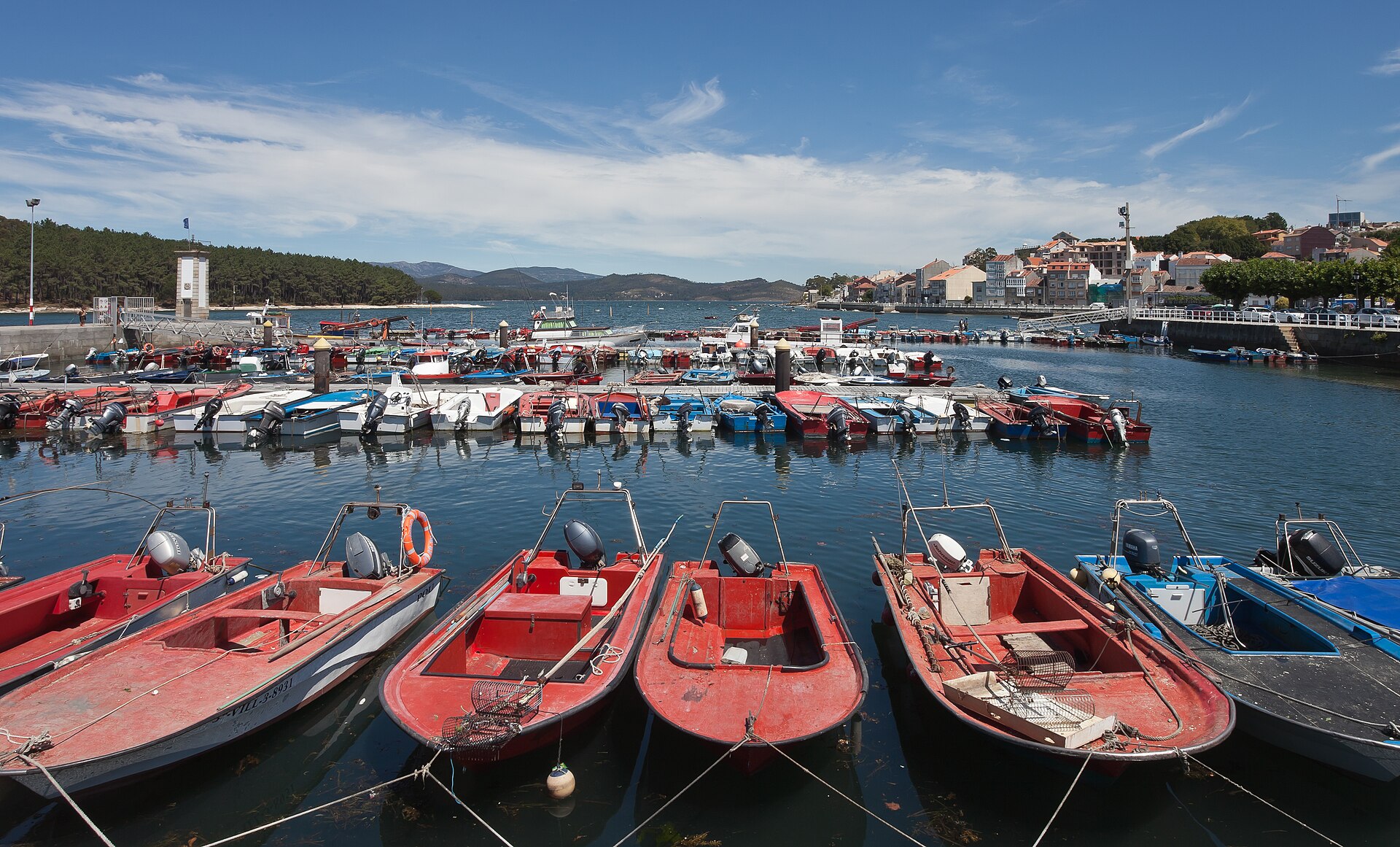
The clam beds: a garden you only see at low tide
If you drive to O Carril at high tide, you'll see nothing: just a sheet of calm water between the harbour and Cortegada. The secret reveals itself at low tide: the sea pulls back and uncovers hundreds of rectangles of sand marked out with stakes and stones, with the parquistas bent over their rakes and baskets.
From the boat, the view is even better. Cruising slowly along the channel, with a close eye on the depth sounder (these are shallow waters and we know them inch by inch — that's what the skipper is for), you take in the whole mosaic of beds, the laurel-covered Illa de Cortegada on one side and the village of O Carril on the other, with its church and fishing harbour. It's one of the most authentic scenes in the whole Ría de Arousa: no tourist gloss here, just people working the sea the same way they did 150 years ago.
One fact that always surprises people on board: a Carril clam takes two to three years to reach market size. Every clam on your plate carries years of work behind it. Once you understand that, the price stops looking expensive.
The boat route from Vilanova de Arousa
Our gastronomic route to O Carril is one of the most rewarding in the inner ría, and it works especially well in September and October:
- Departure from the port of Vilanova de Arousa, heading north, leaving the Illa de Arousa and its bridge to port.
- Through the mussel rafts: we cross the polygons of bateas, and if you're curious we'll explain how mussel farming works (and why the ría's mussels are another treasure).
- Illa de Cortegada: we skirt the national park, home to Europe's finest laurel forest. If the day is kind, we drop anchor for a while in its sheltered waters.
- Along the Carril beds: slow cruising off Compostela beach to see the cultivation plots — at low tide, the spectacle of the parquistas at work; at high tide, we tell you what lies beneath.
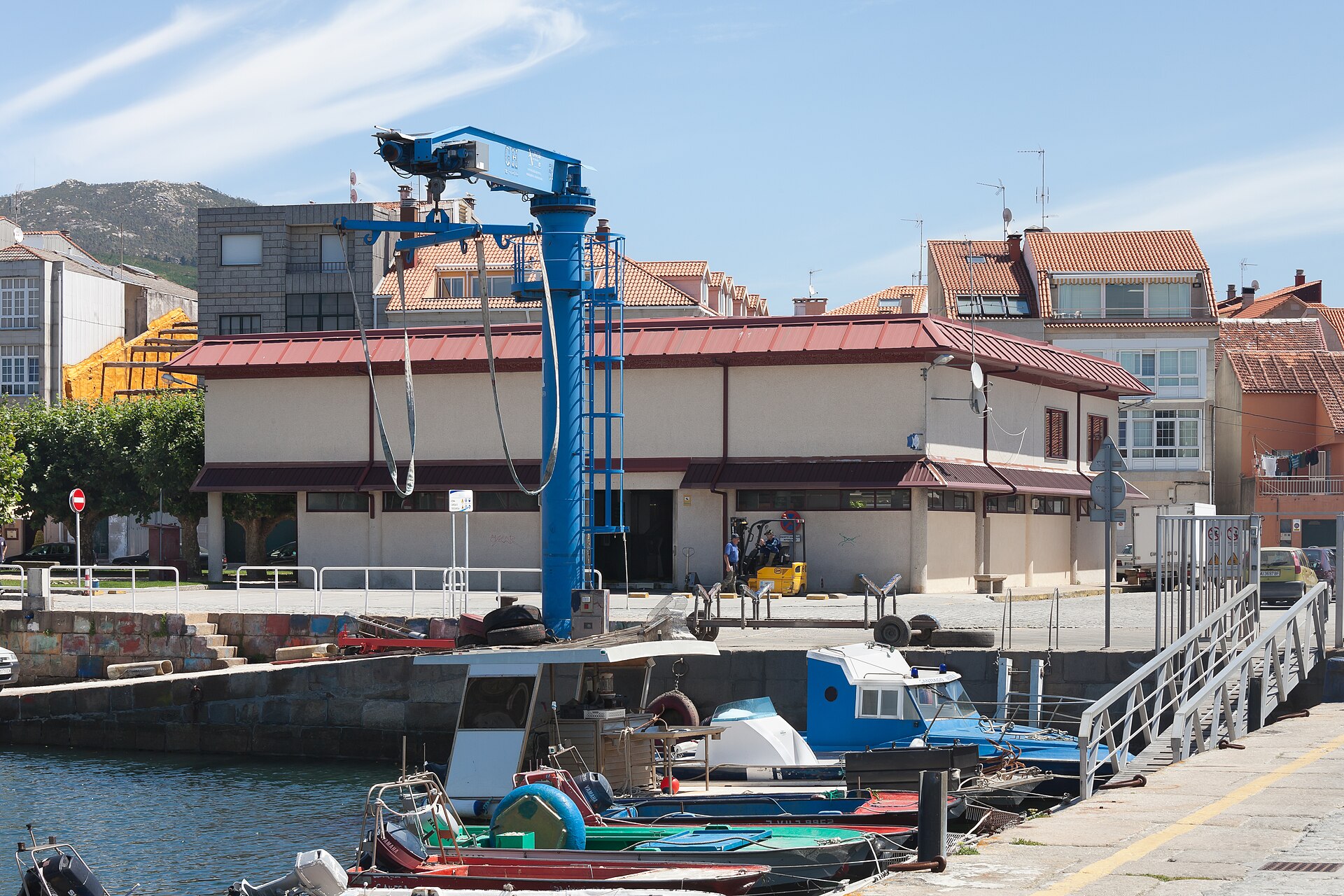
- O Carril and Vilagarcía: views of the fishing port, the fish market and the seafront. And on the way back, the option everyone loves: stepping ashore to eat clams.
On a half-day trip (4 hours, €300) this route is done at a relaxed pace, anchoring included. If you'd rather have the full day (€500), it combines beautifully with a swim at Areoso or a stop in Cambados to finish with an Albariño. Fuel is charged separately, and the boat takes up to 6 guests plus the skipper — who on this route doubles as your local guide.
Where and how to eat Carril clams
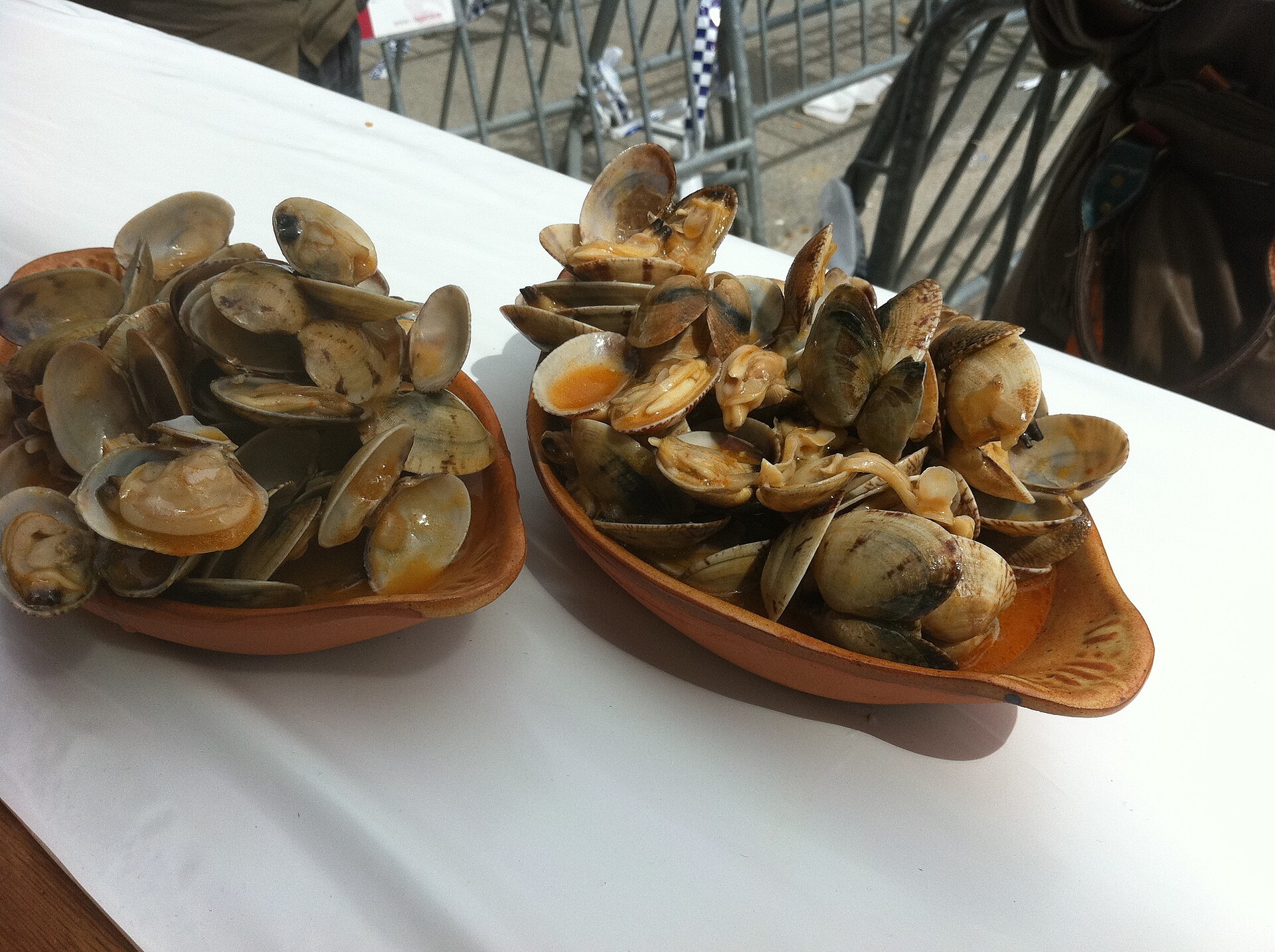
The canonical preparation is a la marinera: softened onion, a little tomato, white wine (Albariño, naturally), paprika, and the clams opening in the pan in their own juices. O Carril and Vilagarcía have a fine crop of restaurants and seafarers' taverns that do them beautifully; they're also superb back in Vilanova, after the trip, in the eateries around the port.
Three tips from the house:
- Always ask for almeja fina de Carril. It's the queen: rounder, with paler shells and a more delicate flavour. The babosa is cheaper and just as honest; the Manila clam is the most common and most affordable.
- Less is more. A clam of this class calls for minimal cooking: a la marinera, flash-grilled with a squeeze of lemon, or simply steamed open. Avoid sauces that smother.
- Autumn is a superb season. After summer the clams are full and flavourful, and in the first week of August (if you come next year) the village holds the Festa da Ameixa de Carril, an officially recognised food festival with tastings right on the harbourside.
A perfect plan: sea, history and table
What we love most about this route is that it brings everything together. In a single morning you sail among mussel rafts, skirt a national park (Cortegada, the great unknown of the Atlantic Islands), watch a trade found nowhere else in the world — the parquistas and their sea gardens — and end up sitting in front of a pan of clams that were under the water a few hours earlier. Along the way, the skipper tells you the stories behind what you're seeing: where the Traslatio carrying the Apostle James sailed up the Ulla, why the bateas sit where they do, which lighthouse is Punta Cabalo.
No licence or experience needed: we take care of the boat. All you have to bring is an appetite.
Book your clam route
We sail from the port of Vilanova de Arousa all year round, weather permitting. Half day €300, full day €500, fuel separate, maximum 6 guests. If you'd like us to time the trip with low tide to see the clam beds in full glory, tell us when you book and we'll arrange it.
Message us on WhatsApp at +34 685 74 24 20 and we'll put together your gastronomic route around the Ría de Arousa.
Photos: Luis Miguel Bugallo Sánchez (Lmbuga) — CC BY-SA 3.0; Agrupación de parquistas de Carril — CC BY-SA 3.0, via Wikimedia Commons.
Ready to experience the Arousa estuary onboard?
Full day €500 · half day €300 · fuel extra. Book on WhatsApp and we confirm in under 4 hours.
Book by WhatsApp

