
Octopus from the Ría de Arousa: season, creel fishing and where to eat polbo á feira after a day on the boat
Octopus from the Ría de Arousa is caught in creels and eaten á feira: when the best season is, how the local fleet works and how to pair it with a skippered boat trip from Vilanova de Arousa.
If there is one dish everyone associates with Galicia, it is polbo á feira (Galician-style octopus). What many people don't know is that much of the best Galician octopus comes from waters like the Ría de Arousa, where the small-scale fleet catches it with creels (nasas) before dawn, just a few miles from where we cast off every day. We rent out our skippered boat from the port of Vilanova de Arousa, and we cross paths with those boats on almost every autumn trip.
In this guide we explain, honestly and without the postcard clichés, when octopus season is, how it is caught, how to spot a good one on your plate and how to fit an octopus lunch around a day on the boat.
Why octopus from the Ría de Arousa is so good
The Ría de Arousa is the largest estuary in Galicia and one of the most productive in Europe. Fresh water from the Ulla and Umia rivers mixes with the Atlantic, and upwellings of cold, nutrient-rich water create an ecosystem packed with food. The mussel rafts (bateas) you see off Vilanova and the Illa de Arousa are not there by chance: everything grows fast here.
The common octopus (Octopus vulgaris) makes the most of this larder. It feeds on crabs, velvet crabs, clams and small fish that thrive on the rocky and gravelly bottoms of the ría. The result is firm, clean-tasting flesh, and in Galician pulperías you can really tell the difference compared with imported frozen octopus.
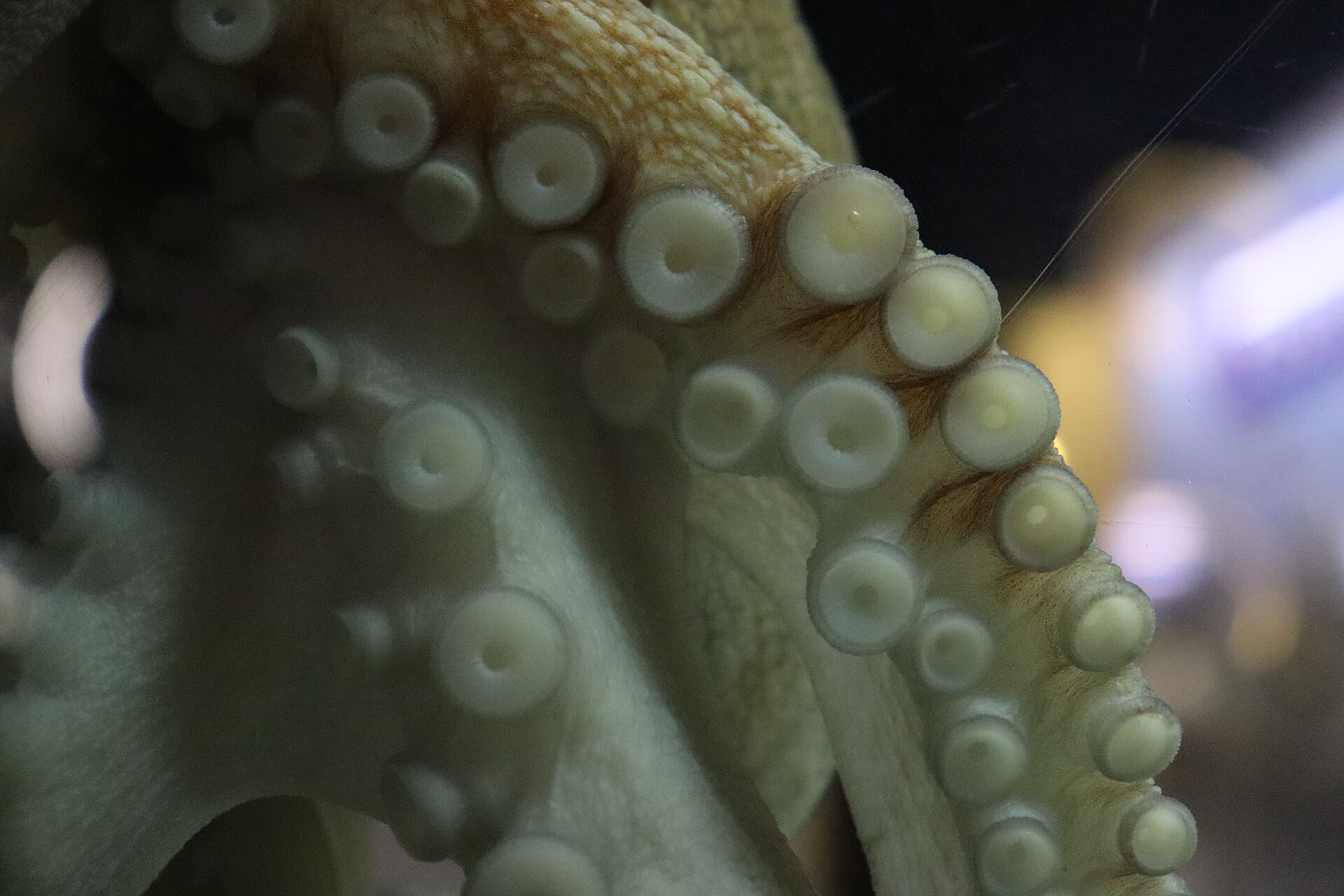
When is octopus season in Galicia?
It pays to be precise here, because there are plenty of myths.
- Closed season: Galicia has a biological closure for octopus in spring and summer to protect breeding. In recent years it has run roughly from May to July, but the exact dates are set every year by the Xunta de Galicia together with the fishermen's guilds (cofradías), and they can vary by area.
- Reopening (summer): when the ban lifts, octopus floods back into the fish markets. It is one of the busiest times in the ports.
- Autumn and winter: for us, the best time to enjoy it. The octopus are a good size, the ría is quiet and the pulperías have fresh local produce.
One detail worth knowing: a closed season doesn't mean you can't eat octopus in summer. Many places use frozen octopus, which is very good when well cooked (freezing actually helps tenderise it). But if you want fresh octopus from the ría, you have more options from September to April.
How octopus is caught: creels
If you head out with us early, you will very likely see the inshore fleet at work. The traditional gear for octopus in the Rías Baixas is the creel (nasa): a kind of cage, once made of wood and netting, now usually metal or plastic mesh, with a funnel-shaped entrance and bait inside (often fish or shellfish scraps).
Roughly, this is how it works:
- Setting: the crew drops long lines of creels tied to a rope, marked with buoys on the surface.
- Soaking: the creels spend the night or several hours on the seabed. The octopus goes in looking for food or shelter.
- Hauling: with a hauler, the creels come up one by one, the octopus are taken out and any below the minimum size go back into the sea.
- Fish market: the octopus is auctioned at the port's lonxa, fully traceable.
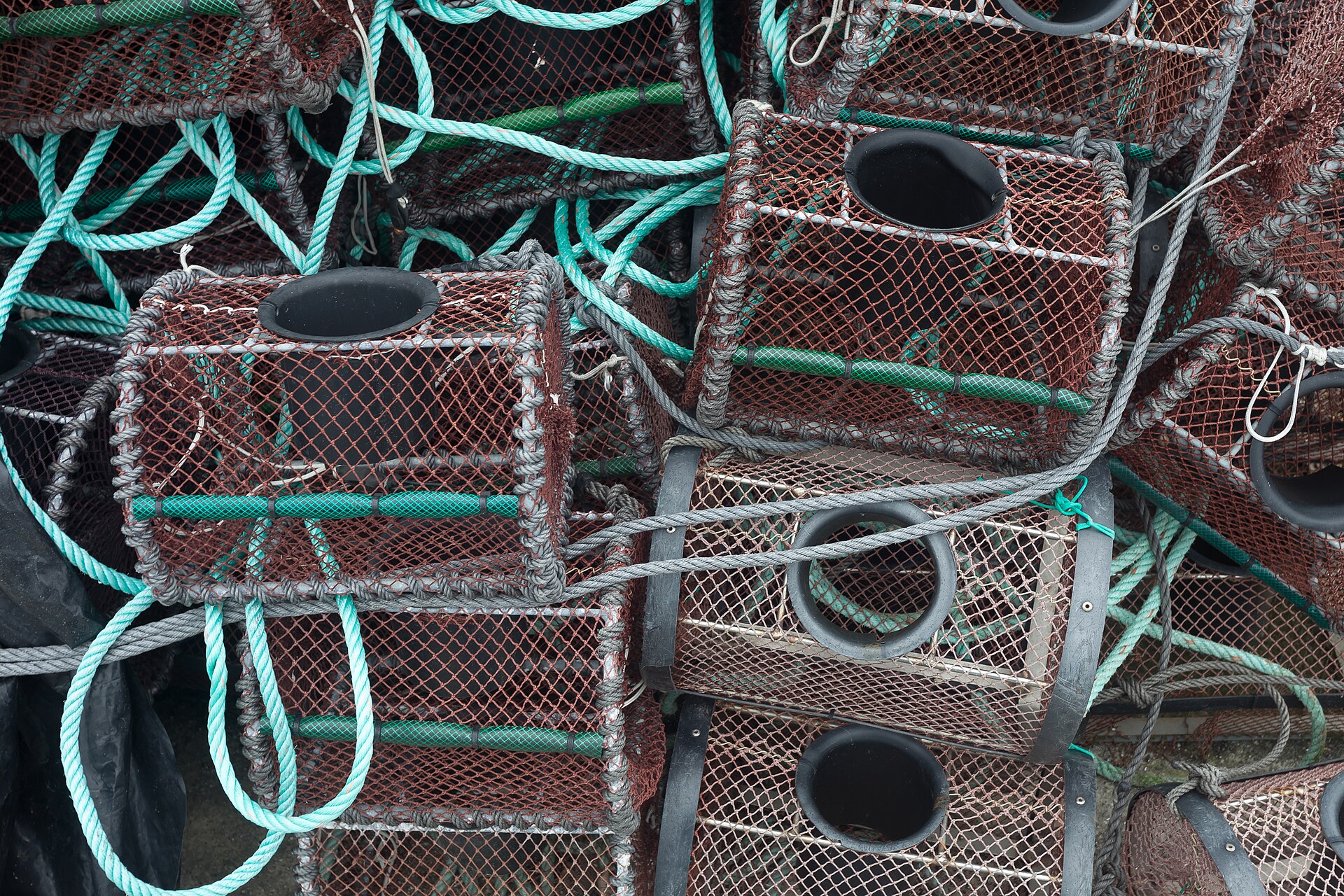
In the ports of Vilanova, Illa de Arousa, Cambados or O Grove you will see piles of creels on the quays. If you're curious, on board we'll show you how to tell creel buoys from other gear, and why you have to navigate carefully so as not to snag a line.
To be clear, as always: we don't fish for octopus or shellfish on board. Creel fishing is professional and regulated; private individuals can't set creels. What we do is show you the setting and recommend where to eat it well afterwards.
Polbo á feira: how to spot a well-made one
Polbo á feira was born at the livestock fairs of inland Galicia, where the pulpeiras cooked octopus in huge copper pots. Today it is eaten all along the coast, and around the Ría de Arousa there are plenty of places that do it beautifully. The basics:
- Cooking: the octopus is "scared" by dipping it in and out of boiling water three times before cooking it through. This keeps the skin on.
- Texture: tender but with a little bite. Neither rubbery nor mushy.
- Presentation: snipped into slices with scissors, served on a wooden plate with coarse salt, paprika (sweet, hot or both) and a generous drizzle of olive oil.
- On the side: cachelos (boiled potatoes in their skins) and local bread.
- To drink: inland they pair it with red wine, but here in the Ría de Arousa the natural match is an Albariño from the D.O. Rías Baixas, made just a few kilometres away in O Salnés.
Other ways you'll find it: pulpo á grella (grilled), with cachelos and garlic-paprika oil, or baked into empanada.
The perfect plan: boat in the morning, octopus at lunchtime
The combination we recommend most in autumn is very simple and fits into our half-day trip (4 hours, €300):
- Early departure from the port of Vilanova de Arousa. Morning light over the ría in November is among the most beautiful of the year.
- Cruise among the mussel rafts, where we explain how mussels are farmed and why the ría is so rich.
- Head for the Illa de Arousa and the Punta Cabalo lighthouse, with the mouth of the ría in the background and, with luck, the creel fleet hauling.
- Return via Areoso, the great sandbank off the Illa de Arousa. At low tide and in good weather, we can anchor and go ashore to stretch your legs.
- Back in port around lunchtime, and off to a pulpería in Vilanova, the Illa de Arousa or Cambados.
If you want something longer, the full day (€500) lets you reach O Grove or Cambados by sea, have lunch there and come back in the afternoon. In both cases fuel is extra, and we estimate it beforehand based on the route, with no surprises.
And for history lovers, we can't leave this out: these are the waters of the Traslatio, the arrival by sea of the body of the Apostle St James, sailing up the ría to Padrón. We follow the same route.
Practical tips for your autumn boat and octopus day
- Dress in layers: in November the water is around 14-15 °C and it feels cooler at sea than on land. A windproof jacket is a must.
- Book your lunch: on autumn weekends the good pulperías fill up with locals.
- Check the forecast with us: if the day brings strong wind or a storm, we'll offer you another date at no cost. We'd rather reschedule than give you a bad experience.
- Small groups: we take a maximum of 6 people plus the skipper, even though the boat (8.5 m long) is certified for 10. You'll be comfortable and the plan is all yours.
- No licence needed: we're the skipper; you just enjoy it.
Quick questions
Can you see octopus from the boat? Alive, it's hard: they're bottom-dwellers and very elusive. What you will see is creel fishing and the work in the ports.
Is there octopus from the ría all year round? No: it isn't fished during the spring-summer closed season. Outside those months, yes.
Can we bring food on board? Of course. Many people bring an empanada to nibble on the boat and save the octopus for lunch ashore.
Book your trip
If a ría-and-octopus plan sounds good this autumn, message us on WhatsApp at +34 685 74 24 20 and we'll tell you which days are free, which route suits the forecast best and where to eat afterwards. Half day €300, full day €500, fuel extra. We depart from the port of Vilanova de Arousa.
Photos: Luis Miguel Bugallo Sánchez (Lmbuga) — CC BY-SA 4.0 / CC BY-SA 3.0; Fernando Losada Rodríguez — CC BY-SA 4.0, via Wikimedia Commons.
Ready to experience the Arousa estuary onboard?
Full day €500 · half day €300 · fuel extra. Book on WhatsApp and we confirm in under 4 hours.
Book by WhatsApp
Scallops and queen scallops of the Ría de Arousa: season, where to eat them and how to see the ría by boat

Oysters of the Ría de Arousa: season, mussel rafts and how to enjoy them by boat
