
Oysters of the Ría de Arousa: season, mussel rafts and how to enjoy them by boat
November is oyster month in the Ría de Arousa. Here's when they're at their best, how they're grown on the bateas and how to enjoy them on a skippered boat trip from Vilanova de Arousa.
There's a moment in the year when the Ría de Arousa tastes different. When November arrives, the days shorten, the water cools and the oysters that have spent months hanging from the bateas reach their peak: firm flesh, a clean taste of the sea and that slightly sweet finish that makes them unmistakable. Harbour bars start setting out trays of ice and lemon, and around Vilanova you'll hear locals say, in Galician, "agora si, que xa hai ostras" — now we're talking, the oysters are here.
We rent out our skippered boat from the port of Vilanova de Arousa and sail this ría almost every day. Every autumn we get the same question: can we do an "oyster trip" by boat? The short answer is yes, with a few nuances. In this post we explain when the season is, how oysters are farmed in the ría, what you'll see from the boat and how to put together a perfect day without breaking any food-safety rules.
When is oyster season in the Ría de Arousa?
The old rule still holds: eat oysters in the months with an "R", from September to April. It isn't just folklore. In the warm months oysters spawn, burn through their reserves and their flesh turns milky and soft. With the cold of autumn and winter, they build up glycogen and gain texture and flavour.
In practice, in the Ría de Arousa:
- September and October: the season opens. Good oysters, though still a little uneven.
- November to February: the sweet spot. This is when most are eaten, peaking around Christmas.
- March and April: still excellent, and the weather starts to turn nicer for sailing.
- May to August: thanks to controlled farming and the Pacific oyster you'll still find them, but it isn't their star moment.
If you fancy combining a boat trip with oysters, November and the first sunny spring days are our favourite dates: the produce is at its best and the ría is calm, without the summer crowds.
Flat oyster and Pacific oyster: the two you'll find
Two species live side by side in Galicia, and it's worth knowing the difference before you order:
Flat oyster (the native one)
This is Ostrea edulis, the traditional oyster of the Rías Baixas. A rounded, fairly flat shell and an intense, mineral flavour with a hint of hazelnut. It's more delicate to farm and scarcer, so it's usually pricier. It's the one connoisseurs look for.
Pacific oyster (cupped or "Japanese" oyster)
This is Magallana gigas, with an elongated, very rough shell. It grows faster, copes better with temperature changes and is the most common one in bars and markets. Its flesh is meatier and its flavour softer and more iodine-forward. For first-timers, it's usually the easiest to enjoy.
Our tip: if you can, order half a dozen of each and compare. It's the best food lesson you'll get on the whole trip.
How oysters are grown on the bateas
If you've ever sailed the ría you already know them: the bateas are the floating wooden rafts dotted across the water between Vilanova, Illa de Arousa and O Grove. Most of them grow mussels — Arousa is one of the world's great mussel producers — but some are dedicated to oysters.
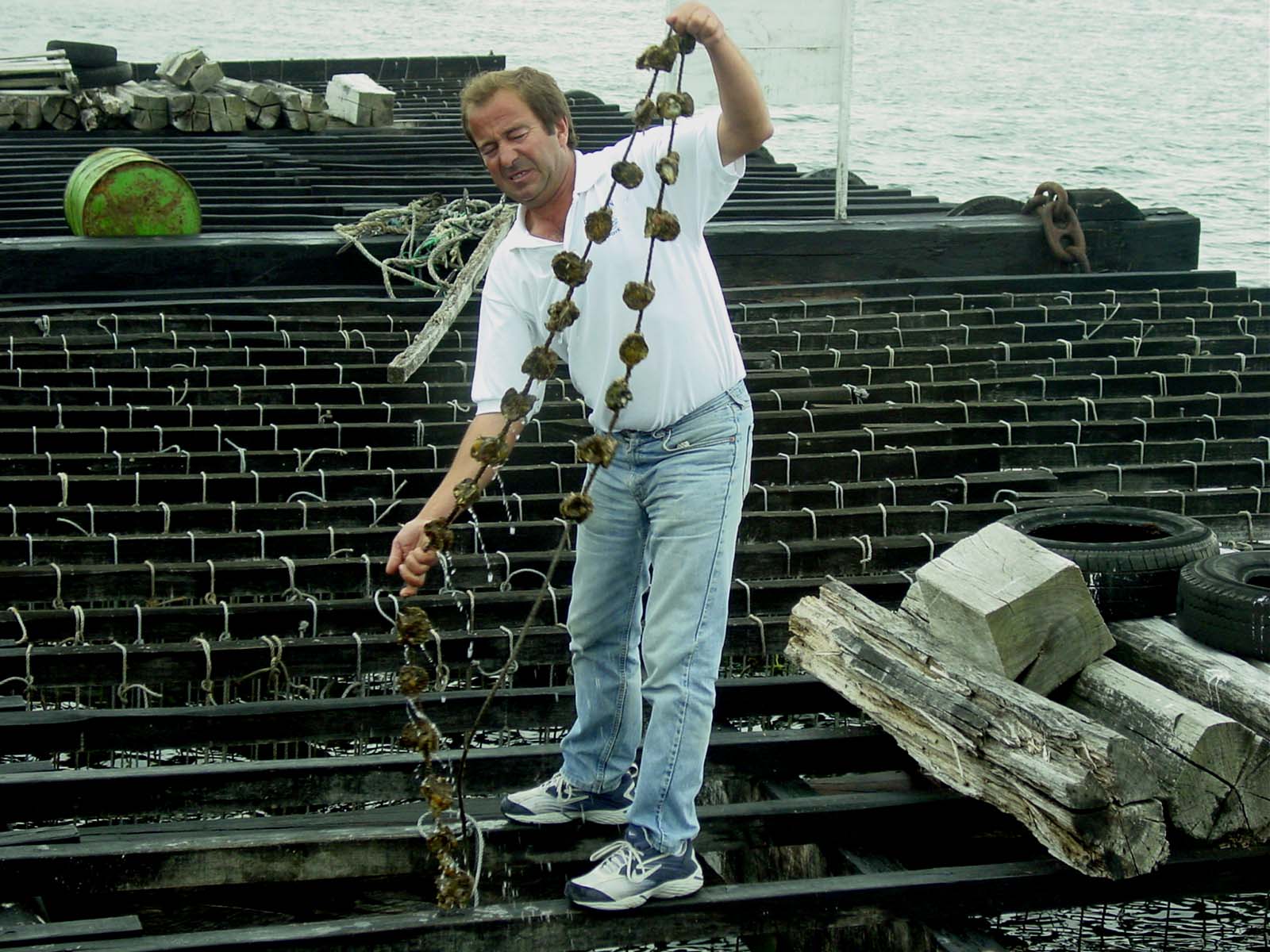
The system is simple and clever: young oysters are attached to ropes or placed in baskets hanging from the raft, submerged in the water of the ría. They never touch the seabed, they feed on the plankton brought in by the tides and they grow clean, free of sand. The meeting of fresh river water (above all from the Ulla) with nutrient-rich Atlantic water is what gives Arousa seafood its reputation.
Before reaching the table, the oysters go through a purification plant (depuradora), where they're kept in filtered, monitored seawater. It's a mandatory step and the reason you can eat raw oysters in Galicia with total peace of mind… as long as they come with their health label.
What you'll see from the boat
An "oyster trip" with us isn't a visit to a raft: the bateas are private farms, and you can't moor alongside or climb aboard without the farmer's permission. What we do is cruise slowly between them, explain how they work and, if timing allows, watch the bateeiros at work on their crane boats hauling up loaded ropes.
A typical half-day (4-hour) autumn route might look like this:
- Departure from the port of Vilanova de Arousa and under the Illa de Arousa bridge.
- Sailing through the raft fields towards the O Grove channel, with an explanation of how mussels and oysters are grown.
- A stop off Areoso, the sandbank next to Illa de Arousa, usually almost deserted in autumn.
- Return past the Punta Cabalo lighthouse, at the tip of Illa de Arousa, in the low afternoon light.
If you choose a full day, there's time to reach Cambados by sea, anchor in a sheltered cove and have a leisurely lunch on board.
Oysters on board: how to do it right
Now the star question: can we eat oysters on the boat? Yes — and it's one of the best things you can do in the ría in autumn. Just follow these rules:
- Buy them from a fishmonger or market. Never pick them from the rocks or a raft yourselves. Besides being prohibited, unpurified shellfish can be dangerous.
- Ask for the health label showing origin and date. It's your guarantee they've been through the purification plant.
- Bring them in a cool box with ice, cupped side down so they keep their liquor.
- An oyster knife and a thick cloth. If you're not practised, ask the fishmonger to open them just before you board and lay them on ice.
- Lemon, bread and, of course, a well-chilled Albariño. The acidity and salinity of an Albariño from O Salnés are the perfect match for oysters.
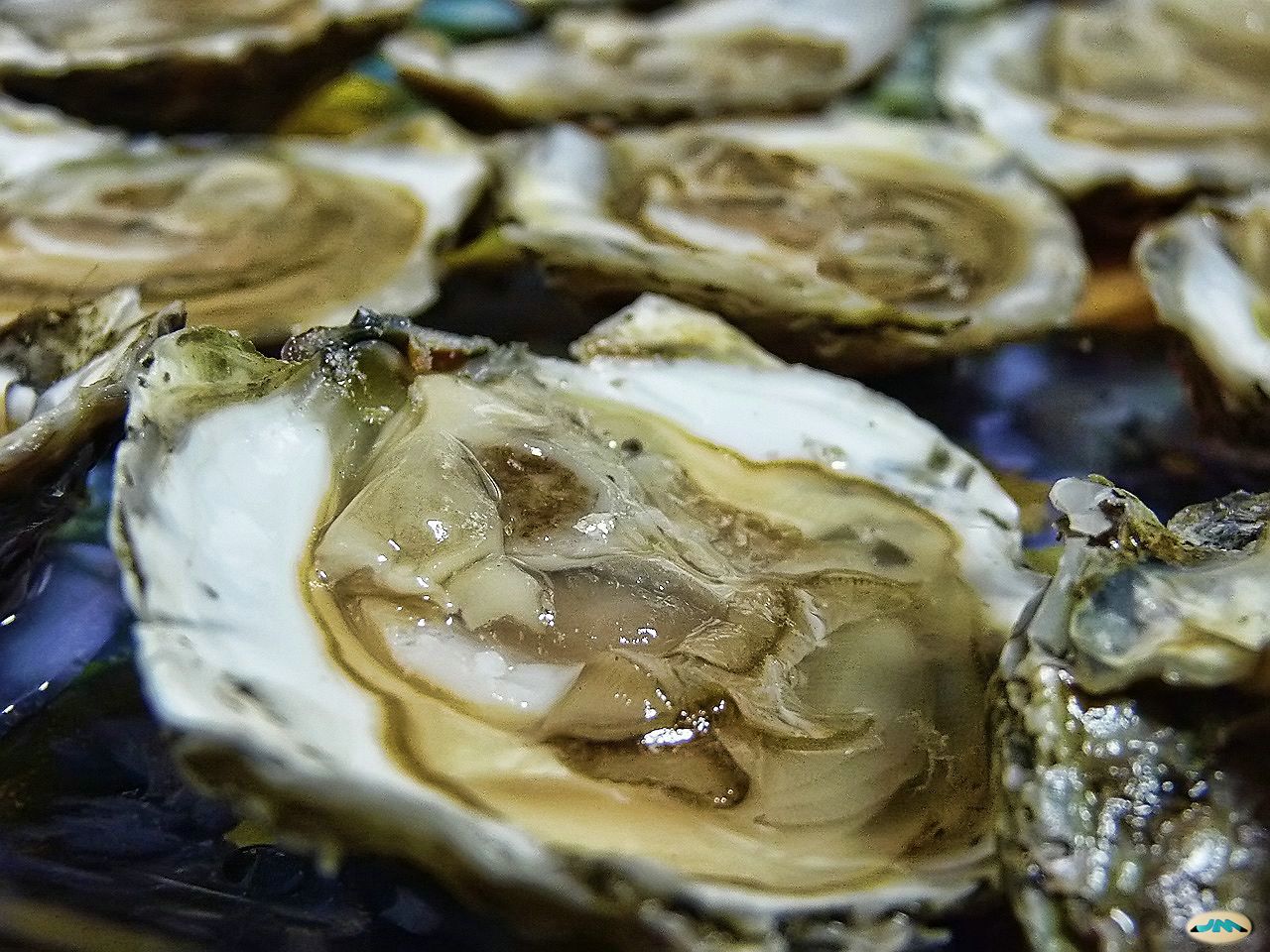
If you tell us when you book, we'll let you know where to buy them in Vilanova or Cambados that same morning. We provide the boat's table, a calm anchorage and the views; you bring the appetite.
Where to try oysters ashore after sailing
If you'd rather go ashore and let someone else do the shucking, the area is full of options:
- Vilanova de Arousa: harbour bars serving seafood from the ría, perfect for ending the trip without getting in the car.
- O Grove: the seafood capital of the ría, with a row of terraces facing the harbour. Its Seafood Festival is in October, but in November you eat just as well and without the queues.
- Cambados: the capital of Albariño; oysters and wine at the same bar, right in the historic centre.
If you're curious, our blog also has a guide to shellfish gathering and the women who do it.
What about the weather in November?
We'll be honest: November in Galicia can bring storms. But between fronts there are days of spectacular light, flat water and mild temperatures, and those are the ones we make the most of. That's why in autumn we work with flexible dates: we check the forecast together a few days before and, if the sea isn't cooperating, we find another day at no cost. Because the ría is sheltered by Illa de Arousa and the O Grove peninsula, we can go out on many days when the open sea is impossible.
For the boat in autumn we recommend: layers, a windbreaker, non-slip, non-marking shoes and sunglasses (yes, in November too).
Prices and booking
- Half day (4 h): €300
- Full day: €500
- Fuel extra, depending on the route.
- Up to 6 people + skipper. An 8.5 m boat, comfortable and with room to set up your own on-board "oyster bar".
A private trip for six through the bateas, with oysters and Albariño at anchor off Areoso, costs less than a seafood dinner for the same group. And you won't forget it.
Fancy an oyster trip on the Ría de Arousa this autumn? Message us and we'll tailor it to you.
WhatsApp: +34 685 74 24 20 — half day €300 · full day €500 · fuel extra · skipper included.
Photos: Rui Ornelas — CC BY 2.0; juantiagues — CC BY-SA 2.0, via Wikimedia Commons.
Ready to experience the Arousa estuary onboard?
Full day €500 · half day €300 · fuel extra. Book on WhatsApp and we confirm in under 4 hours.
Book by WhatsApp
Octopus from the Ría de Arousa: season, creel fishing and where to eat polbo á feira after a day on the boat

Scallops and queen scallops of the Ría de Arousa: season, where to eat them and how to see the ría by boat
