
Iron Age Hillforts of the Ría de Arousa by Boat: a History Route from the Sea
Neixón, Alobre, A Lanzada: the castros of the Ría de Arousa were built facing the water. Here's how to see them by boat from Vilanova de Arousa — and why the sea is the best way to understand them.
When people picture a boat trip on the Ría de Arousa, they picture beaches, mussel rafts and seafood. Fair enough. But there's another route few people imagine, and one we love to do in autumn, when the light is low and the estuary is calm: the route of the castros, the fortified villages that the ancient inhabitants of Galicia built more than two thousand years ago on the headlands and hills overlooking the water.
We rent out our skippered boat from the port of Vilanova de Arousa, and we've spent years pointing out these headlands from the deck. The same thing nearly always happens: from land, a castro looks like a pile of stones; from the sea, you suddenly understand why it's there. In this article we explain which hillforts you can see while sailing, the stories behind them and how to fit them into a half day or a full day on board.
Why the Ría de Arousa is full of castros
The Castro culture occupied the northwest of the Iberian Peninsula during the Iron Age, roughly from the 8th century BC until the arrival of Rome. Its villages — the castros — are easy to recognise: round stone houses, concentric walls and ditches, always on high ground that was easy to defend.
On the Galician coast, many of them were built on peninsulas jutting into the sea. That's no accident. For people who lived from fishing, shellfish gathering and trade by boat, the estuary was pantry, highway and border all at once. Archaeologists have found heaps of shells in these castros, bronze fish hooks and pottery that arrived by sea from the Mediterranean. In other words, the people of Arousa were already doing, in their own way, what we do on the ría today: looking to the water and living from it.
That's why a boat is the best way to understand a coastal castro. From the water you see exactly what someone arriving by sea 2,000 years ago would have seen: the headland sticking out, the cove it shelters and its commanding position over the estuary.
The castros we see from the boat
Castros de Neixón (Boiro): the jewel of the north shore
Across the ría, on the Boiro coast, Punta Neixón holds two hillforts side by side: the Castro Grande and the Castro Pequeno. Both have been excavated, can be visited on foot and sit next to an archaeology centre devoted to the Castro culture of the Barbanza peninsula.
From the boat the headland is easy to spot: a wooded tongue of land reaching into the sea, with the open ría in front and mussel rafts lined up around it. It's one of the places where Castro logic is clearest, because the point controls the whole inner bay of Boiro.
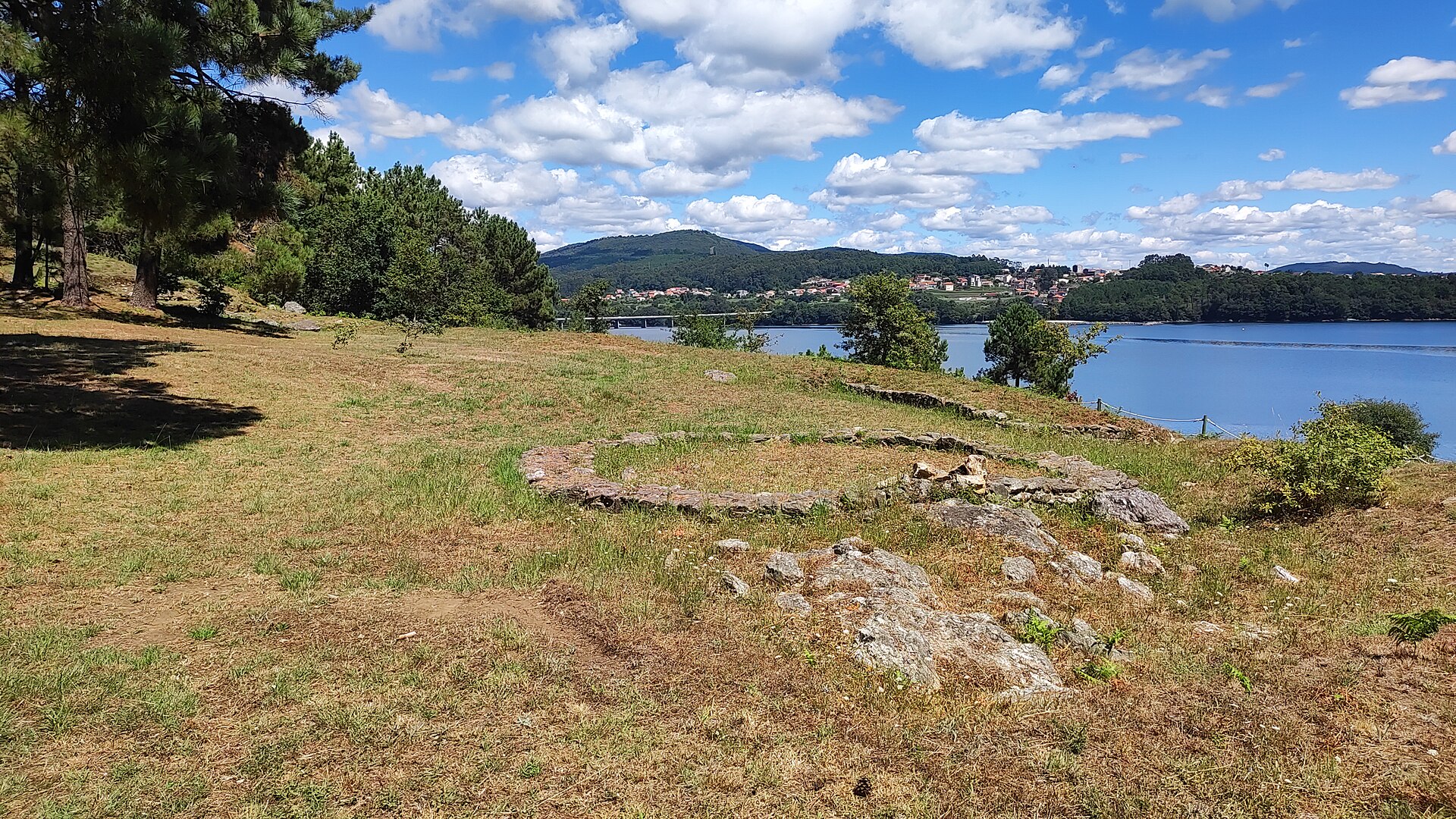
From Vilanova de Arousa, crossing to the Neixón area is an easy sail on a calm morning. We usually combine it with the Boiro coast and the mussel rafts of the north shore; if that side of the ría interests you, there's more in our guide to Boiro by boat.
Castro de Alobre (Vilagarcía): the hillfort in the middle of town
Right in Vilagarcía de Arousa, a stone's throw from the port, there's a green hill many people walk past without knowing what it is: Monte de Alobre, site of a castro that was among the first to be excavated in Galicia and which yielded Castro-era and Roman finds. Today it's a wooded park in the town centre.
From the water, heading into Vilagarcía harbour, you can clearly see how that small rise dominated the head of the estuary. It's an easy stop to fit into a half day, since Vilagarcía is very close to Vilanova by boat. If you'd like to go ashore, take a look at our Vilagarcía by boat route.
A Lanzada: hillfort, tower and chapel on the same headland
Leaving the ría and rounding O Grove to the south, you reach A Lanzada, one of the most layered historical sites on the whole coast. On a single headland you'll find Castro-era and Roman remains — including shell middens that tell us what its inhabitants ate — the ruins of a medieval tower built to watch the coast against raids from the sea, and the Romanesque chapel of Nosa Señora da Lanzada, famous for its pilgrimage.
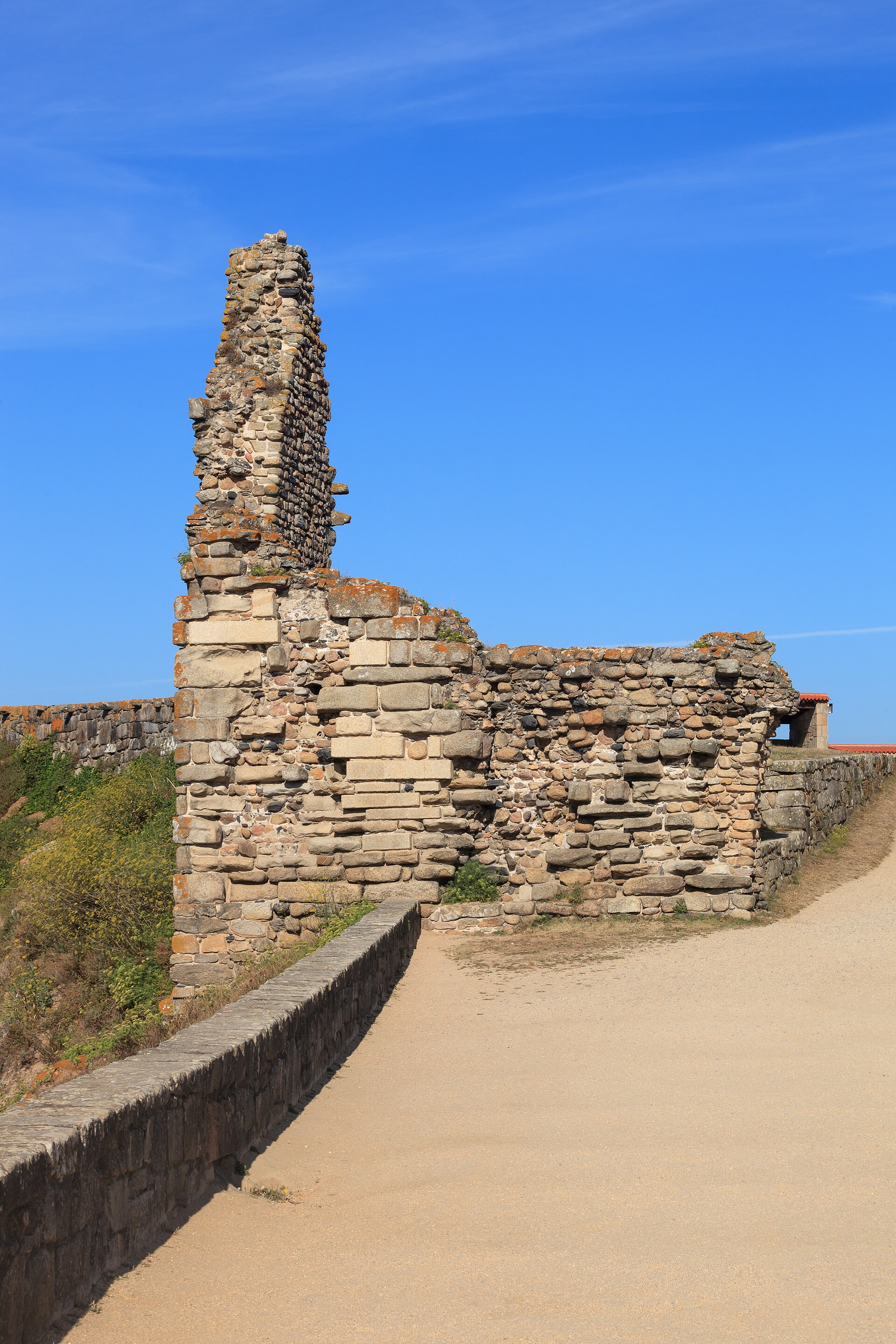
A Lanzada is too far for a half day, but perfect for a full day. You'll find the detailed route in our article on Sanxenxo and A Lanzada by boat.
And as a bonus: Torres do Oeste
Not a castro, but it completes the story: at the head of the ría, where the Ulla river meets the sea, the Torres do Oeste at Catoira are a reminder that this coast remained a gateway — and an invasion route — for centuries afterwards. It's also the route by which, according to tradition, the Apostle's body arrived: the Traslatio, the only Way of St James travelled by sea.
How we plan the castros route
There's no fixed itinerary: we shape it around the day, the wind and what interests you. These are the two options we suggest most.
Half day (4 hours) — €300
- Departure from the port of Vilanova de Arousa.
- Past the Illa de Arousa and the Punta Cabalo lighthouse.
- Crossing to the north shore to see the Neixón hillforts from the sea.
- Return via the mussel rafts and, time permitting, a close look at Vilagarcía and Alobre.
Full day — €500
- All of the above at a relaxed pace, with a stop to go ashore and visit Neixón on foot if you like.
- A swim or anchoring off Areoso if the weather allows.
- Out of the ría towards O Grove and A Lanzada to see the hillfort, tower and chapel from the water.
- Lunch on board or in port, with a local Albariño.
In both cases fuel is extra and is calculated on the miles covered. We take a maximum of 6 guests plus the skipper on an 8.5 m boat certified for 10: plenty of room and comfort, which is exactly the point.
Tips to get more out of the route
- Autumn and winter are a good time. There's less vegetation, the light is low and the walls are much easier to read. The ría is also calm and uncrowded.
- Bring binoculars. The headlands are visible to the naked eye, but with binoculars you can make out ramparts and structures.
- If you want to go ashore, tell us in advance. That way we can plan where to moor and how much time to allow.
- Warm layers and a windbreaker. In November it's always a couple of degrees cooler on the water than on land. More ideas in our guide on what to bring on a boat day.
- Great for curious minds and families. Kids love imagining how people arrived here 2,000 years ago and guessing "where the village gate would have been".
An estuary with 2,000 years of seafaring history
The castros remind us of something we know well in Vilanova de Arousa: life here has always faced the sea. The people of Neixón or Alobre gathered shellfish, fished and traded in the same waters where today the mussel farmers head out to their rafts. Sailing between those two eras, with a hillfort on one shore and mussel rafts on the other, is one of the most special experiences you can have in the Rías Baixas.
If you're looking for boat rental in Vilanova de Arousa that goes beyond the beach — or simply a different outing this autumn — this route is for you.
Book your castros route
Message us on WhatsApp at +34 685 74 24 20, tell us which day suits you, how many of you there are and whether you'd like to go ashore to see a hillfort, and we'll tailor the route for you. Half day €300, full day €500, fuel extra. The history of the ría has been waiting two thousand years — all that's missing is you on board.
Photos: Xoan Anton (CC BY 2.0), Josi (CC BY-SA 4.0) and Luis Miguel Bugallo Sánchez (CC BY-SA 4.0), via Wikimedia Commons.
Ready to experience the Arousa estuary onboard?
Full day €500 · half day €300 · fuel extra. Book on WhatsApp and we confirm in under 4 hours.
Book by WhatsApp

