
Boiro by Boat from Vilanova: Praia de Barraña, Cabo de Cruz and the North Shore of the Ría de Arousa
Crossing to Boiro by boat from Vilanova de Arousa is one of the most complete trips on the ría: two kilometres of sand at Barraña, the mussel-fishing port of Cabo de Cruz and the densest mussel rafts in Galicia, all in one outing.
When someone asks us for "a route that isn't the usual one", we often suggest the same thing: point the bow north and cross the Ría de Arousa to Boiro. We rent our boat here, in the port of Vilanova de Arousa, and the Boiro shore is right in front of us, on the other side of the water. You can see it from the pontoon. And yet almost nobody visiting from elsewhere has it in mind: everyone thinks of O Grove, A Toxa or the Illa de Arousa, and misses the north shore, the A Coruña side, home to one of the longest beaches in the Rías Baixas and the mussel-fishing port with the most character on the whole ría.
In this article we explain what the crossing is really like: how long it takes, where we pass, what you see from the water at Praia de Barraña and Cabo de Cruz, when it is best to do it and what it costs.
Where Boiro is and why it deserves a boat trip
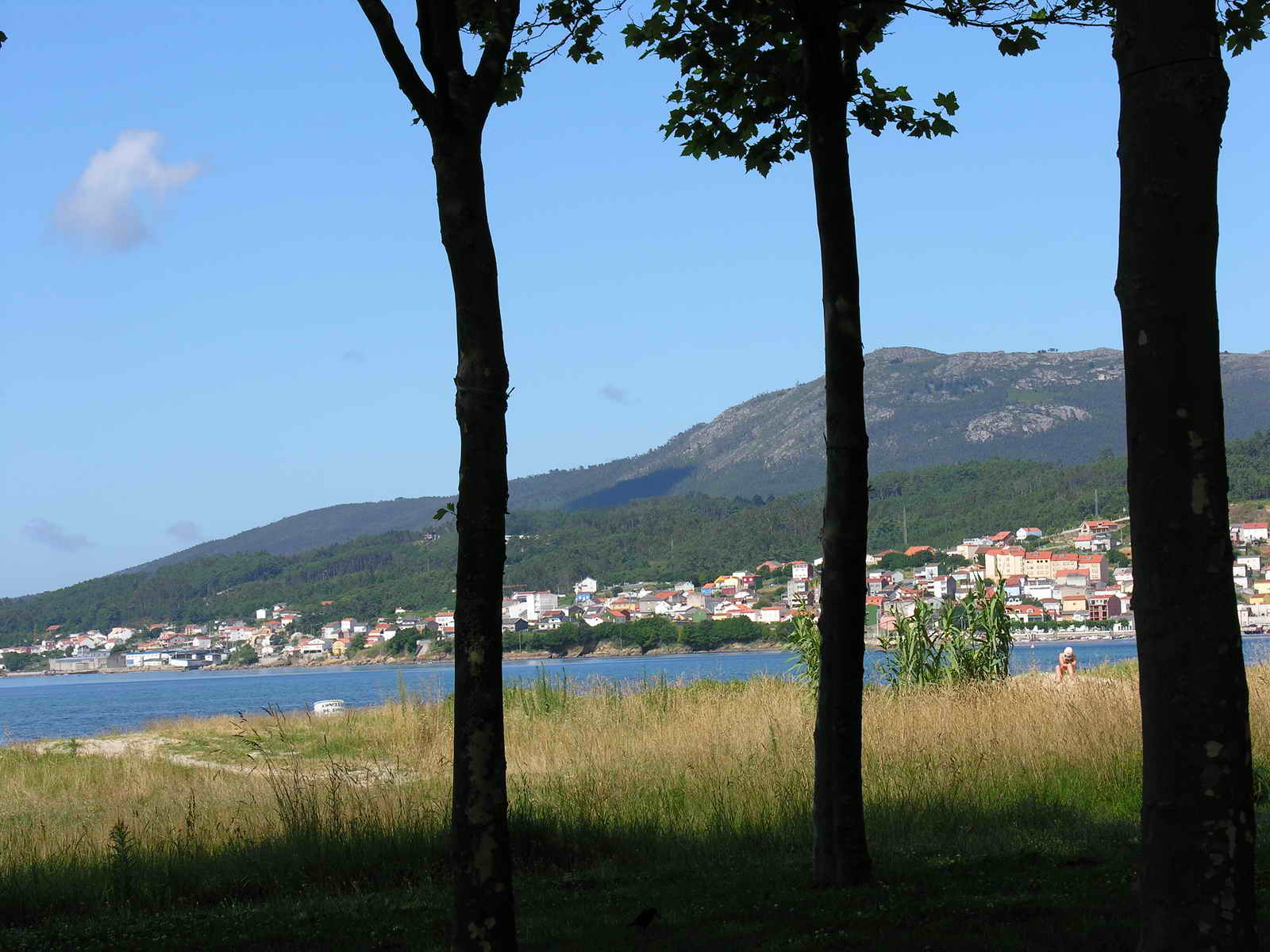
Boiro occupies the north shore of the Ría de Arousa, between Rianxo and A Pobra do Caramiñal, at the foot of the Barbanza mountains. From Vilanova de Arousa, as the crow flies, there are about 5 nautical miles of water in between. By road it takes over 40 minutes, going all the way round via Padrón or Catoira; by boat, in good weather, you are there in little more than half an hour of easy cruising.
That is the beauty of this route: the boat does what the road cannot. It turns two shores that are far apart by land into neighbours, and it does so by crossing the best of the ría: the northern tip of the Illa de Arousa, the Punta Cabalo lighthouse, the Xidoiros islets and the great mussel-raft fields of Boiro, among the densest in all of Galicia.
The crossing step by step
Leaving Vilanova and rounding the Illa de Arousa
We leave the port of Vilanova de Arousa and keep the Illa de Arousa bridge to port. We head up the channel between the island and the Vilanova coast, passing the beaches of O Bao and As Sinas. This is sheltered water, perfect for everyone to get used to the boat, take the first photos and see the first mussel rafts up close.
Punta Cabalo and the Xidoiros
At the northern tip of the Illa de Arousa we pass the Punta Cabalo lighthouse, the small 1853 lighthouse that is now a restaurant, and the Xidoiros soon appear to starboard: Xidoiro Pedregoso and Xidoiro Areoso, with its white sandbank. If the day allows, we stop here for a while. In October, with the ría empty of summer visitors, Areoso goes back to being what it really is: a deserted sandbank in the middle of the sea.
Crossing the ría and the mussel-raft fields
From the Xidoiros the crossing proper begins. About two miles of open water northwards, with the Barbanza range growing ahead. Before reaching the Boiro coast we enter its mussel-raft fields: hundreds of wooden platforms lined up, mussel ropes hanging beneath them and the raft boats working between them. Cruising slowly along the lanes between the rafts, engine barely ticking over, is one of the experiences that most impresses first-time visitors. It is a landscape that exists only here.
Praia de Barraña
And then, suddenly, the beach. Praia de Barraña is about two kilometres of fine, pale sand, with a promenade behind it and the town of Boiro in the background. It is Boiro's town beach and has held Blue Flag status for years, but from the water what strikes you is the scale: in a ría full of small coves, Barraña is a line of sand that never seems to end. We anchor off the beach, at a safe distance from the swimming area, and anyone who wants can take a dip or paddle to the shore on the board.
Cabo de Cruz, the mussel port
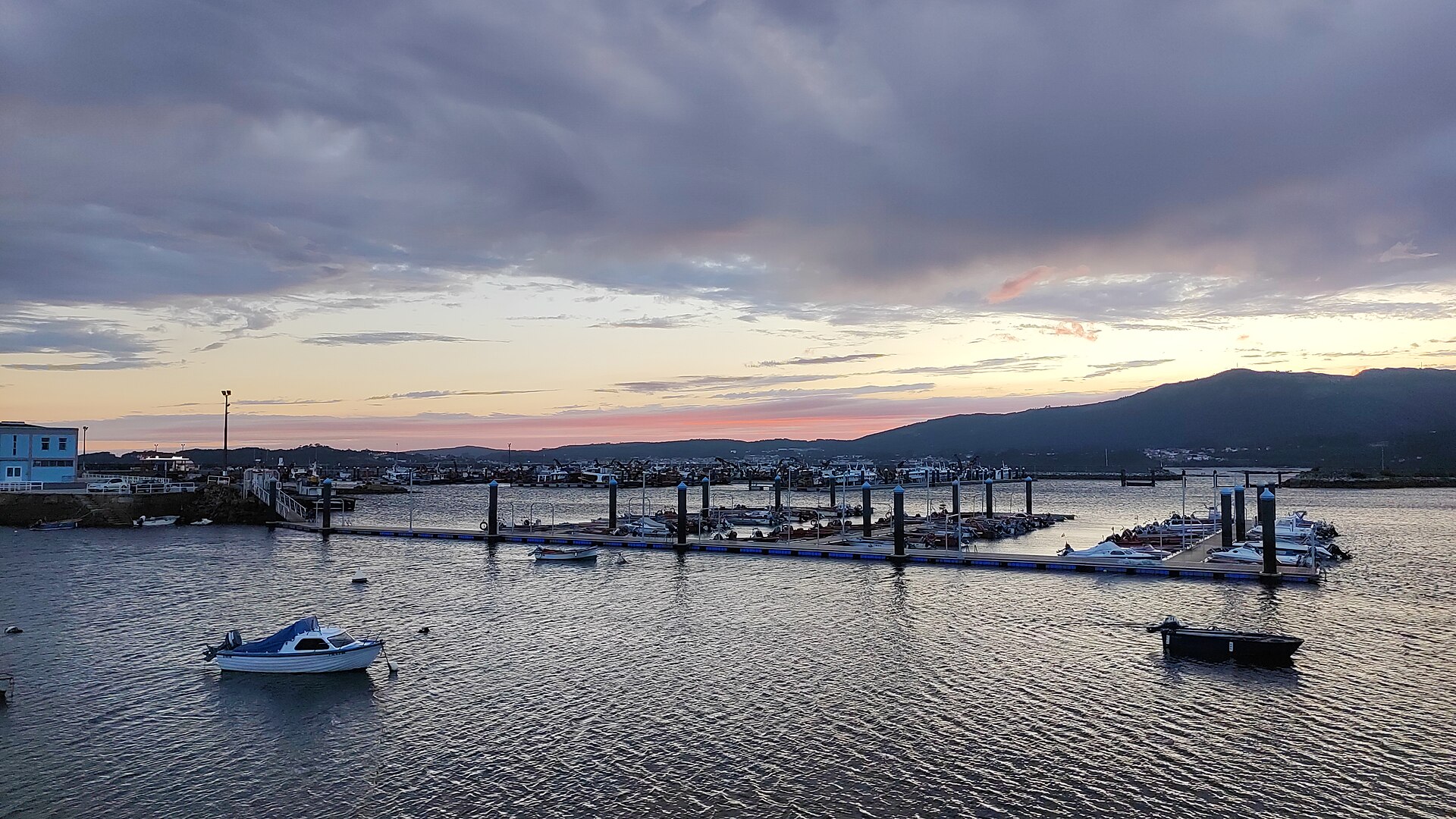
A little further west lies Cabo de Cruz, Boiro's fishing village par excellence. Its harbour is one of the great mussel ports of the ría: the raft boats, wide and low with a crane on deck, come and go all day long. Around it are small beaches such as Carragueiros and Mañóns, and behind, the hills. It is an honest, working place, with no tourist postcard about it, and that is exactly why we like bringing our clients here: this is the real seafaring Galicia, seen from where it looks best, the water.
What else to see on the Boiro shore
- The Neixón hillforts. On the Neixón headland, next to Cespón, there are two excavated Iron Age hillforts open to visitors. From the boat you can make out the promontory and understand exactly why they chose it: it controlled the whole entrance to the ría.
- The Rianxo inlet. Continuing east, the coast closes in and we enter the head of the ría, with Rianxo in sight and the shellfish beds where clams are farmed.
- The Barbanza range. The whole crossing is made with the mountains ahead. In autumn, with the first low clouds caught on the summit and the slanting light, the contrast with the flat water of the ría is spectacular for photography.
Best time and conditions
The Boiro route can be done almost all year round, but there is a catch: the crossing is the most exposed part. With a strong afternoon north-easterly, the stretch of open water between the Xidoiros and Barraña gets choppy and can be uncomfortable for those not used to it. That is why in summer we do it in the morning, when the ría is calm, and in autumn and winter we choose anticyclone days, which in Galicia often bring completely flat seas.
October, in fact, is one of our favourite months for this trip. The ría is empty, the water still holds the summer warmth, the mussel rafts are in full activity and the light is softer than in July. And in Boiro, as everywhere on the ría, it is shellfish season.
As always, we as skippers make the call on the day. If conditions are not right for crossing, we say so and suggest an equally good alternative along the south shore, with the Illa de Arousa, Carreirón and Areoso. We never sacrifice anyone's comfort to stick to a plan.
How we organise the day: half day or full day
For Boiro we recommend two formats:
- Half day (4 hours): €300. Departure from Vilanova, round the Illa de Arousa and Punta Cabalo, crossing through the mussel rafts, anchoring and swimming off Praia de Barraña and return via Areoso. This is the most popular option.
- Full day: €500. All of the above, at a relaxed pace, plus a visit to Cabo de Cruz, a cruise along the coast towards Neixón or Rianxo and time for lunch. You can stop to eat in Boiro or Cabo de Cruz, or return to the Illa de Arousa for a seafood feast in the port of O Xufre.
In both cases the price is per boat, not per person, for a maximum of 6 people plus the skipper, and fuel is charged separately according to distance sailed. The Boiro route uses a little more fuel than a trip around the Illa de Arousa because there are more miles, and we always say so up front so there are no surprises. The boat is 8.5 metres long and certified for 10, but we limit groups to 6 so everyone travels in comfort.
What to bring
The basics for any trip on the Ría de Arousa, with a couple of notes for this route:
- Sunscreen and a cap, even in October. On the water the sun hits twice as hard.
- A windproof layer. On the crossing, with the boat under way, it always gets cooler.
- Towel and swimwear if you fancy a swim at Barraña.
- Camera or phone with battery: the Boiro mussel rafts against the light are the photo of the day.
- If you are prone to seasickness, take a tablet half an hour before boarding. The crossing is short, but better safe than sorry.
On board we carry life jackets for everyone, a cooler for drinks and, on request, a paddle board and snorkelling gear.
Book your crossing to Boiro
If you want to discover the north shore of the Ría de Arousa from the water, message us on WhatsApp at +34 685 74 24 20 with the date you have in mind and how many you are. We will tell you whether the day looks good for crossing, suggest the calmest departure time and have it booked for you in two messages. We depart from the port of Vilanova de Arousa, ten minutes from Cambados and twenty from Sanxenxo and O Grove.
Boiro is right there across the water. All you need is a boat to get there.
Photos: Josi (Praia de Barraña and Porto de Cabo da Cruz), CC BY-SA 4.0; Luis Miguel Bugallo Sánchez (Lmbuga), CC BY-SA 3.0, via Wikimedia Commons.
Ready to experience the Arousa estuary onboard?
Full day €500 · half day €300 · fuel extra. Book on WhatsApp and we confirm in under 4 hours.
Book by WhatsApp

