
Dolphin watching in the Ría de Arousa: how, when and where to spot them from a boat
Seeing dolphins in the Ría de Arousa is more common than you think: here's when the local bottlenose dolphins show up, where they roam and what a real sighting looks like from our skippered boat.
Of all the questions we get before casting off, one comes up almost every week: "Can you see dolphins in the Ría de Arousa?". And the answer, given with the caution of people who sail this ría all year round, is yes — you can, and far more often than most visitors imagine. We rent out our skippered boat from the port of Vilanova de Arousa, and we cross paths with them dozens of times every season. That said: these are wild animals, not performers. Nobody honest can guarantee dolphins. What we can do — and do — is tell you when, where and how to maximise your chances, and what to do (and not do) if they show up.
The arroaces: our local dolphins
In Galicia the bottlenose dolphin (Tursiops truncatus) is called an arroaz, and it's the most common cetacean in the Rías Baixas. The Galician rías are home to one of Europe's most important bottlenose dolphin populations: stable groups that live here year-round rather than just passing through. The reason is the same one that makes the Ría de Arousa produce the world's best mussels: the upwelling of cold, nutrient-rich Atlantic water. Where there's plankton there are sardines, mackerel and mullet; and where there's fish, there are arroaces.
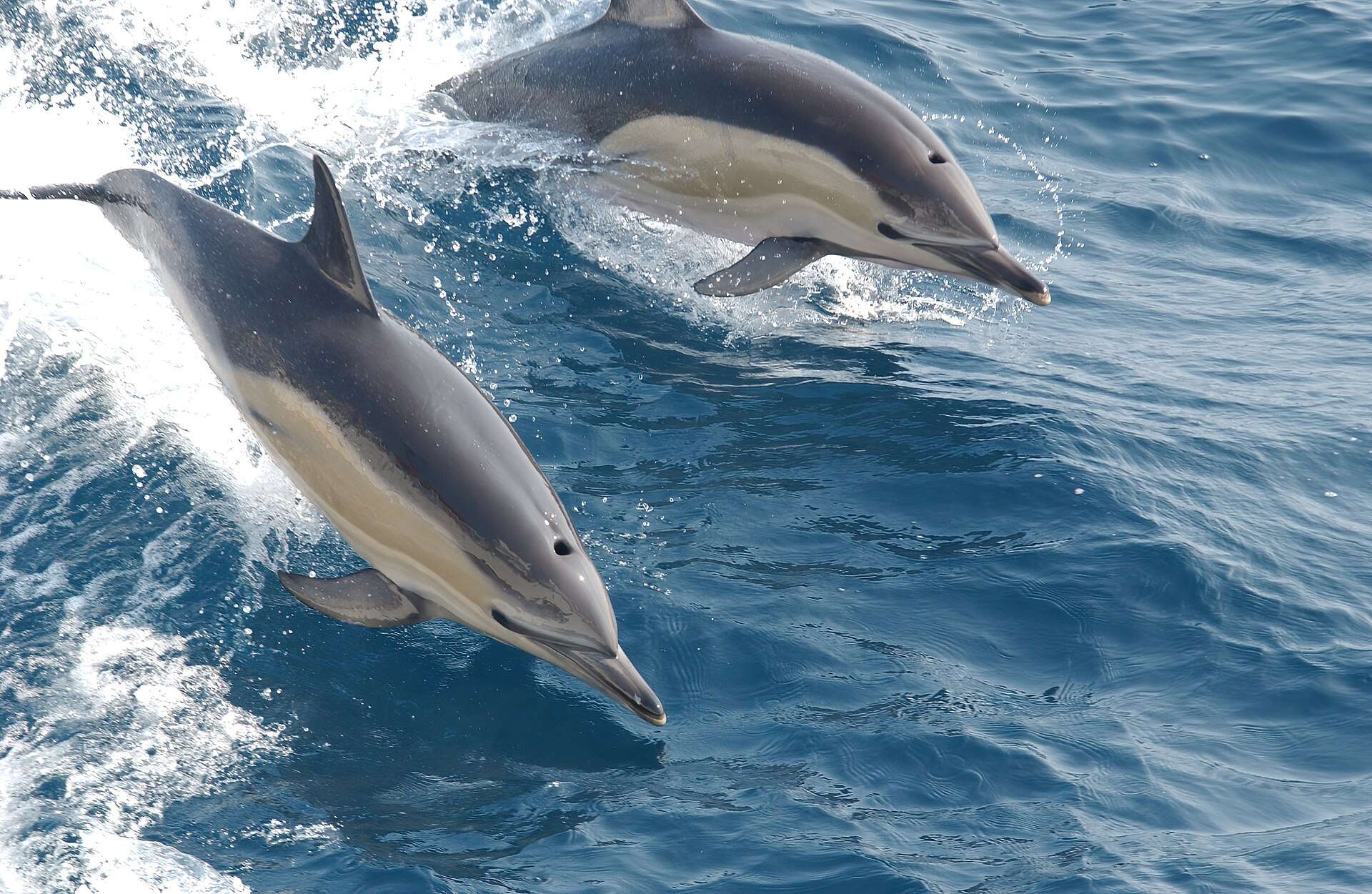
An adult arroaz measures between 2.5 and 3.5 metres — bigger than people expect — and moves in groups that here usually number 5 to 15 individuals, sometimes with calves. Beyond the bottlenose, out towards the mouth of the ría and the open sea it's not unusual to see the common dolphin (Delphinus delphis): smaller, faster, with that unmistakable yellowish flank. And on the odd day, a sea turtle or a sunfish basking at the surface, which always raises a cheer.
When your chances are best
First and most honestly: there are sightings all year round, because the arroaces don't migrate — they live here. That said, after hundreds of trips out of Vilanova de Arousa, our experience is this:
- May to October is the best window. The water is more alive, the fish schools follow the food into the ría and the dolphins follow them.
- Late August and September — right now — are especially good: sardine and mackerel shoals are inside the ría and the arroaz groups regularly work the mussel-raft zones and the mouth.
- Early morning and late afternoon beat midday. On a calm sea you can spot a fin 500 metres away; with wind and chop, a whole pod can pass 100 metres off and you'll miss it.
- Calm seas and light traffic: weekdays outside August, with the ría half empty, are gold for this.
And in winter? You still see them — some December days are spectacular, with the ría flat as glass and the arroaces feeding at their leisure — but we go out less and conditions rule.
Where they tend to roam in the Ría de Arousa
Without giving away fishing coordinates (the dolphins wouldn't respect them anyway), these are the areas where we have the most encounters:
The mouth and the main channel
The entrance to the ría, between Sálvora island and the Ribeira coast, is a dolphin motorway: that's where they come in following the fish. On our full-day trips, when we head down towards the outer ría, that's where the odds are highest.
The mussel-raft polygons
The ría's more than 2,300 mussel rafts (bateas) don't just feed half of Galicia: they create a rich ecosystem that attracts small fish — and behind them, arroaces. Watching dolphins hunt between the rows of rafts, weaving around the floats, is one of the most Galician scenes there is.
Between the Illa de Arousa and the Areoso islet
The channel we run almost daily, passing the Punta Cabalo lighthouse, also springs surprises. More than once we've arrived at the white sandbank of Areoso escorted for a stretch by two or three animals that appear, take a look at us and carry on with their day.
What a real sighting looks like (no fairy tales)
Here's how it usually goes, because expectations matter. You're cruising towards Areoso or the mouth of the ría and someone shouts "there!". First you see one grey back cutting the water, then another, and suddenly you realise a whole group is moving in the same direction. If they're feeding, you'll see the water boil and gulls dive-bombing the same spot: birds working above, dolphins below — that combination rarely lies.
When they appear, we do what Spain's cetacean protection regulations (Royal Decree 1727/2007) require — and what plain common sense dictates if we want to keep seeing them for many years:
- We slow down and hold a steady course, never heading straight at them or cutting across their path.
- We never chase them. If they want to come close — and they often do, they love playing in the bow wave — they're the ones who approach.
- We respect the exclusion-zone distance (60 metres) and always leave the group a clear escape route.
- Engine in neutral if they start playing around the boat: the show is a thousand times better in silence.
- No feeding, no swimming with them, no shouting. They're wild animals fishing in their own home.
Played by these rules, encounters usually last 5 to 20 minutes and are — no exaggeration — what people remember most from the trip. We've seen more than one grown adult moved to tears.
Our recommended trip for finding dolphins
If dolphins are your priority, we recommend the full day (€500, fuel not included): it gives us time to run down to the outer ría and the mouth, where the odds are best, plus anchor at Areoso, eat on board or on the Illa de Arousa and come back unhurried. The 4-hour half day (€300, fuel not included) produces plenty of sightings too — the bateas are right next door — but we stay closer to port.
The boat departs from the port of Vilanova de Arousa, is 8.5 metres long and carries a maximum of 6 guests plus the skipper, even though it's certified for 10: we'd rather you have room to stand up and scan the water on both sides — which, for dolphin spotting, is exactly what you need. The skipper, who has known this ría all his life, reads the water and the birds throughout the trip.
Quick tips for the sighting
- Bring polarised sunglasses: they cut the glare and you'll spot the backs much sooner.
- A small pair of binoculars helps, but isn't essential.
- For photos, shoot video or burst mode: dolphins don't pose.
- Don't glue yourself to your phone screen. The moment is better enjoyed with your own eyes.
- And be patient: the ría always delivers something. If one day there are no dolphins, there are still the bateas, the lighthouses, Areoso with its Caribbean-looking water and a sunset the Caribbean would envy.
Book your trip to look for arroaces
We're in the best season of the year to try. Message us on WhatsApp at +34 685 74 24 20, tell us which day suits you and how many you are (maximum 6), and we'll set it up: half day €300 or full day €500, fuel not included. If the arroaces show up — and they often do — you'll take home one of those memories that never expires.
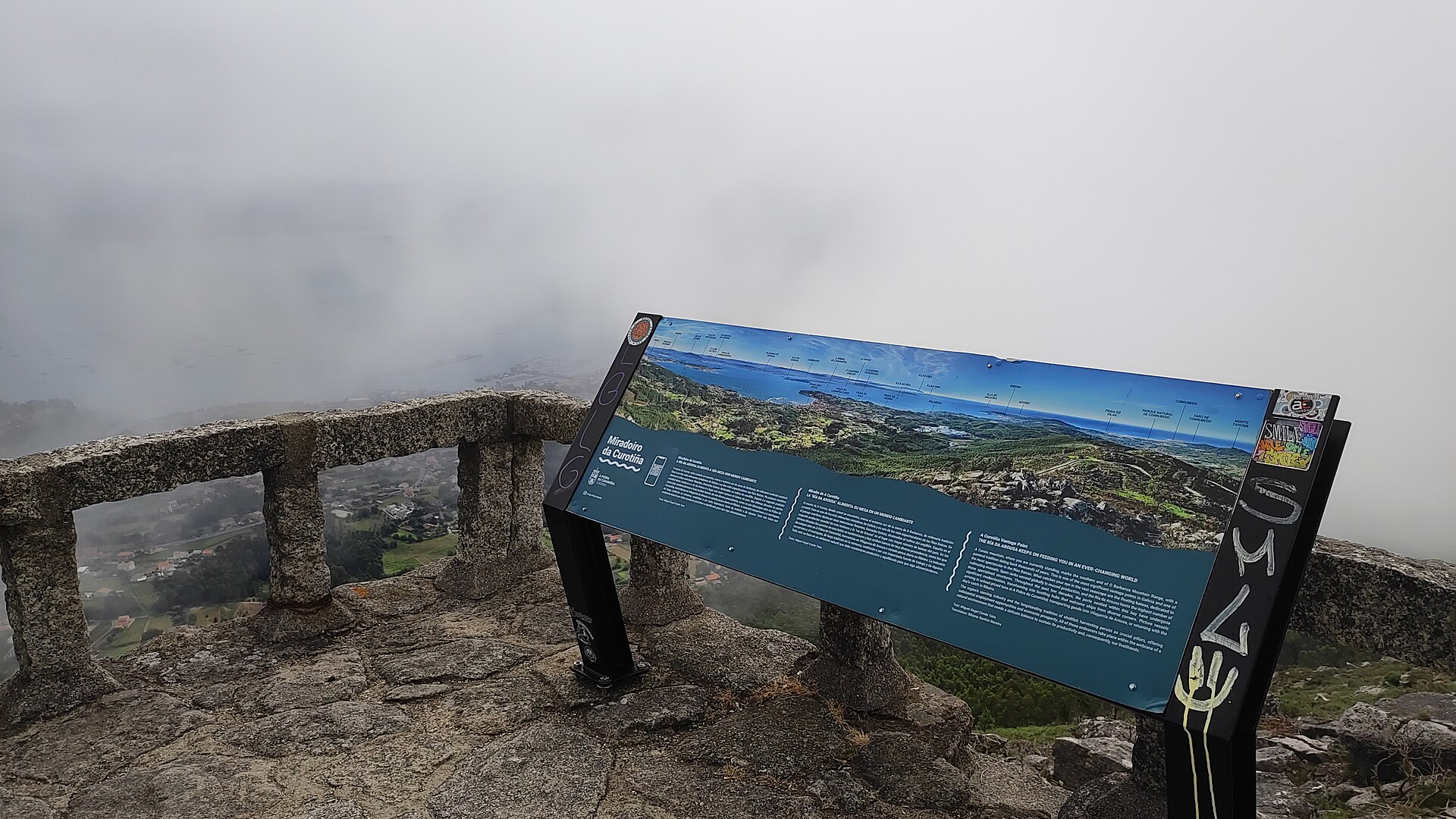
Photos: bottlenose dolphins — NASA, public domain; common dolphins — NOAA, public domain; panoramic view of the ría — Josi, CC BY-SA 4.0, via Wikimedia Commons.
Ready to experience the Arousa estuary onboard?
Full day €500 · half day €300 · fuel extra. Book on WhatsApp and we confirm in under 4 hours.
Book by WhatsApp

