
Rianxo by boat from Vilanova: the town of A Rianxeira on the northern shore of the Ría de Arousa
Crossing the Ría de Arousa by boat to Rianxo is one of our favourite trips: the home town of Castelao and A Rianxeira, a harbour full of traditional dornas, mussels with a name of their own, and a northern shore almost no tourist ever sees from the sea.
Almost everyone who rents a boat on the Ría de Arousa looks south: Areoso, Illa de Arousa, O Grove, A Toxa. And we get it — they are magnificent destinations, and we've written guides to all of them ourselves. But the ría has two shores, and the northern one hides one of the most soulful towns in Galicia: Rianxo. We rent out our boat with skipper from the port of Vilanova de Arousa, and whenever the plan and the tide allow, we cross the ría to get there — and we promise you that arriving in Rianxo by sea, the way people always did, is a different experience altogether.
In this article we'll tell you what Rianxo is, why its name rings a bell for every Galician even if they've never been (hint: A Rianxeira), what you'll see during the crossing from Vilanova, and how we fit this route into a half-day or full-day charter.
Where Rianxo is and why almost nobody visits it by sea
Rianxo is a fishing town in the Barbanza area, on the northern shore of the Ría de Arousa, already in the province of A Coruña. It sits across the water from Vilanova, close to the mouth of the river Ulla and to Illa de Cortegada. By road from Vilanova you have to drive all the way around the ría via Catoira and Padrón — a good forty-five minutes. By sea, it's about 6 nautical miles in a straight line across one of the most beautiful seascapes in the Rías Baixas.
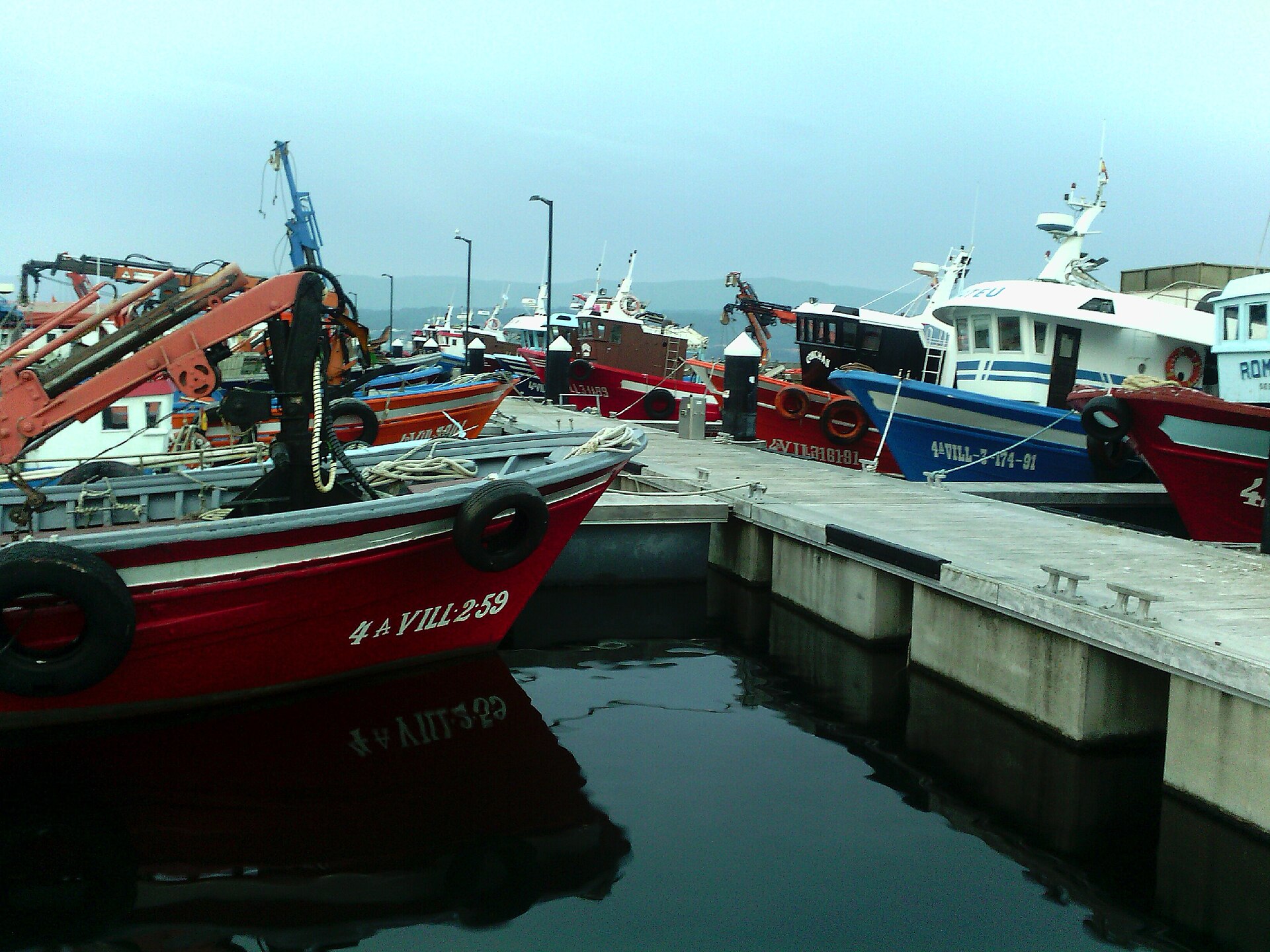
That's precisely the charm: land tourism concentrates on the southern shore, and Rianxo remains a town that essentially belongs to its own people. A harbour full of working boats, seafaring houses with white galleries, a seaside promenade and taverns where mussels and sardines aren't decoration — they're the daily menu.
A Rianxeira: the song that put Rianxo on the map
If you've ever been at a party in Galicia, you've sung about Rianxo without knowing it. A Rianxeira, the unofficial anthem of all Galicians, was born here: two Rianxo emigrants composed it in Buenos Aires in 1947, dedicated to the Virxe de Guadalupe, the town's patron saint. Every September, during the Festa da Guadalupe, the song comes home: the image of the Virgin is carried out in a maritime procession escorted by dozens of decorated boats, and the whole town welcomes her singing "ondiñas veñen, ondiñas veñen e van…".
The ondiñas — the little waves — are these ones, the waves of the Ría de Arousa. Singing it while crossing them by boat has a certain solemnity to it, we won't lie.
The town of Castelao, Dieste and Manuel Antonio
For a town of barely 11,000 people, Rianxo has produced a wildly disproportionate cultural roll-call. This is the birthplace of Castelao, the central figure of Galician identity, writer, illustrator and politician; Rafael Dieste, one of the great Galician storytellers of the 20th century; and Manuel Antonio, the avant-garde poet who wrote De catro a catro aboard a sailing ship — probably the finest book of sea poetry ever written in Galician. All three birthplaces are signposted in the old town, five minutes' walk from the harbour.
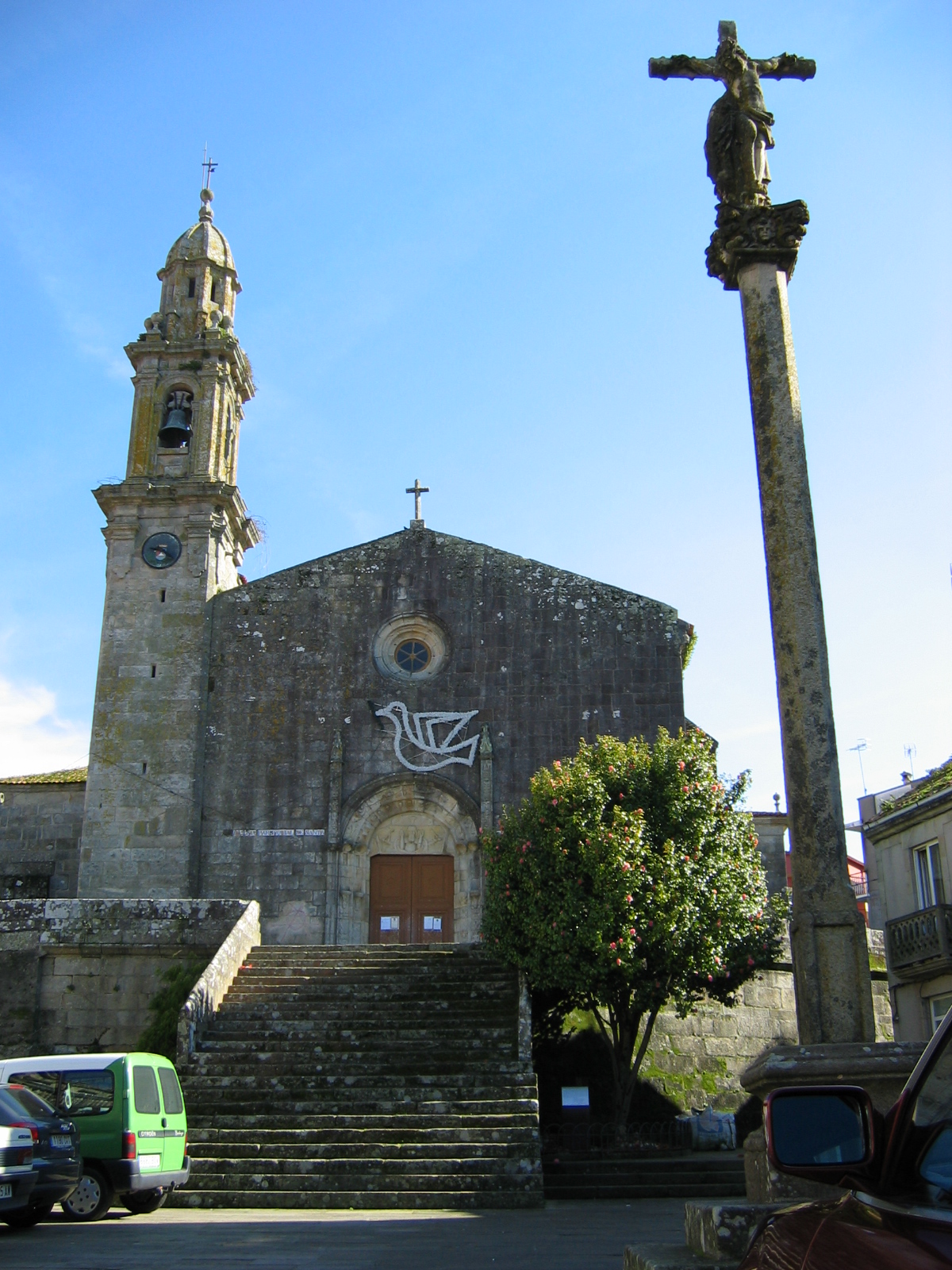
The stroll through the centre is short and delightful: the praza de Castelao with its arcades, the Gothic church of Santa Comba — more than seven centuries old —, the Baroque stone cross in the praza de Rafael Dieste and the promenade facing the ría.
Rianxo mussels: rafts with a surname
The crossing from Vilanova passes between polygons of bateas, the wooden rafts where the mussels that made this ría famous are grown. The people of Rianxo boast — with good reason — of growing some of the best mussels in Galicia: their bateas work waters where the river Ulla delivers a constant supply of nutrients, and you can taste it. If you want to understand how a batea works from the inside, we explain it in our mussel raft route; on the way to Rianxo you'll see them up close on both sides of your course.
And the theory is best completed in the harbour: a plate of steamed or pickled mussels in any quayside tavern, with a cold Albariño, is the proper way to round off the landing.
What the crossing from Vilanova de Arousa is like
We leave the port of Vilanova de Arousa and head north-northeast. The typical plan:
- Departure from Vilanova: we leave Illa de Arousa and the Punta Cabalo lighthouse to port and cross the channel between the mussel rafts.
- Mouth of the Ulla: we pass close to Illa de Cortegada, the floating laurel forest of the Atlantic Islands National Park. If you fancy it, the route combines beautifully with a close approach to the island.
- Arrival in Rianxo: we enter the cove slowly, among dornas and fishing launches, with the town opening up ahead. Free time to wander the old quarter and have a drink by the harbour.
- Return: depending on light and wind, we come back through the same channel or stretch the route towards Carril and its famous clams before heading for Vilanova.
This inner part of the ría is sheltered water: the crossing is comfortable even for first-time sailors, and children tend to love it because there's always something to look at — bateas, dornas, herons at the mouth of the Ulla and, with luck, the odd dolphin.
Half day or full day?
- Half day (4 hours, €300): crossing to Rianxo with a good hour ashore to stroll and have a drink, then a relaxed return. Perfect if what you're after is the sailing and the town.
- Full day (€500): Rianxo + Cortegada + Carril, or Rianxo in the morning and a swim at Areoso or the coves of Illa de Arousa in the afternoon. The full tour of the ría — northern and southern shores in a single day.
In both cases fuel is charged separately, based on the actual consumption of the route. Our boat comes with the skipper included — no licence needed — and takes up to 6 guests on 8.5 metres of length, with plenty of room to travel in comfort.
Practical tips for the Rianxo route
- Book ahead in September: the Festa da Guadalupe fills the town and the maritime procession is spectacular, but you'll want to lock in a date early.
- Comfortable shoes: the old town is stone-paved with a gentle slope; it's a lovely walk, but better without beach flip-flops.
- Arrive moderately hungry: leave room for the harbour mussels. Seriously.
- Camera ready among the bateas: morning light on the northern shore, with the hills behind Rianxo, gives some of the best photos in the ría.
- Trust the skipper with the fine navigation: the mouth of the Ulla has shifting sandbanks; we sail it all year round and adjust the passage to the day's tide.
Book your crossing to Rianxo
If you want to discover the shore of the ría that almost nobody visits — the town of Castelao, the home of A Rianxeira, the mussels with a surname — message us and we'll tailor the plan to your group: WhatsApp +34 685 74 24 20. We depart from the port of Vilanova de Arousa: half day €300, full day €500, fuel separate, skipper included and up to 6 guests.
Ondiñas veñen… and we'll carry you right over them.
Photos: Luis Miguel Bugallo Sánchez (Lmbuga) — CC BY-SA 3.0; Dodro — CC BY-SA 4.0; Lameiro — public domain. Via Wikimedia Commons.
Ready to experience the Arousa estuary onboard?
Full day €500 · half day €300 · fuel extra. Book on WhatsApp and we confirm in under 4 hours.
Book by WhatsApp

